
Native American Combat Arts: A Complete Guide to Indigenous Fighting Systems


Hundreds of distinct nations across North America developed formalized fighting systems long before any European set foot on the continent. These weren't improvised brawling methods. They were structured, transmitted, and refined over generations — complete with dedicated weapons, empty-hand techniques, tactical doctrines, and the cultural frameworks that gave combat meaning. Yet when most people think about martial arts with deep roots and technical sophistication, they jump straight to Asia or medieval Europe. Native American combat arts rarely enter the conversation.
That's a gap worth closing.
This guide covers the weapons, the empty-hand traditions, the history, and the one formally codified system you can train in today. No mysticism. No romanticizing. Just the technical and historical record, as honestly as the available sources allow.
- Before Martial Arts Had a Western Name, These Systems Already Existed
- Core Weapons of Native American Combat Arts
- Empty-Hand Traditions: Grappling, Striking, and Wrestling Across Nations
- Okichitaw: The First Codified Indigenous Martial Art
- Historical Context: How Indigenous Combat Evolved Through Conflict and Trade
- Techniques and Principles That Define Native American Combat Arts
- Training in Native American Combat Arts Today
- Native American Combat Arts Deserve a Seat at the Table
-
FAQ
- Are there any Native American martial arts?
- What is Okichitaw and where can I train in it?
- What weapons were central to Native American combat systems?
- How do Native American combat arts compare to other martial arts traditions?
- Is it culturally appropriate for non-Indigenous people to train in these arts?
- What Native American combat arts techniques are documented and taught today?
Before Martial Arts Had a Western Name, These Systems Already Existed
The word "martial art" comes from Latin — ars martialis, the art of Mars, god of war. But the concept is universal. Any culture that organized violence, trained its warriors deliberately, and transmitted those methods across generations produced a martial art. By that standard, Indigenous North American fighting traditions qualify without question.
Why 'Martial Art' Is the Right Term for Indigenous Combat
A martial art isn't defined by its geography or its age. It's defined by systematic training, codified technique, and intentional transmission. Plains warriors didn't just pick up a tomahawk and swing it. They trained weapon mechanics, studied range management, and drilled transitions between tools. Woodland nations had formal wrestling traditions with recognized holds and rules of engagement. These are the hallmarks of a fighting system — not casual violence.
Calling these traditions martial arts isn't an act of cultural borrowing. It's accurate description. The alternative — treating Indigenous combat as primitive instinct rather than developed skill — is the actual disrespect.
The Diversity Problem: No Single 'Native American' Fighting Style
Here's where most general articles go wrong. They talk about "Native American fighting" as if it were one thing. It wasn't. North America was home to hundreds of distinct nations, each with its own language, ecology, social structure, and — critically — its own combat traditions.
A Haudenosaunee (Iroquois) warrior's close-quarters system looked nothing like the open-terrain fighting methods of a Lakota horseman. A Pacific Northwest nation's canoe-warfare tactics bore no resemblance to the desert ambush methods of the Southwest. The terrain shaped the weapon. The weapon shaped the body mechanics. The body mechanics shaped the system.
Keep that diversity in mind throughout this guide. When we name specific nations or systems, we're being precise on purpose.
Core Weapons of Native American Combat Arts
Weapons are where the technical record is clearest. Archaeological finds, oral histories, and documented post-contact accounts give us enough to reconstruct the mechanical logic of each tool. The weapons central to Plains Indigenous fighting — the ones preserved in systems like Okichitaw — form a coherent arsenal with distinct ranges and roles.
The Gunstock War Club: Geometry as a Weapon
The gunstock war club is shaped like the stock of a musket — curved, dense hardwood with a projecting blade or spike at the curved end. That shape isn't decorative. It's engineering.
The curve creates a natural fulcrum. When you swing it, the angled head accelerates through the arc faster than a straight club would. The projection concentrates force into a small contact point, amplifying impact. In close quarters — inside a lodge, along a riverbank, during a mounted clash — that geometry gave the wielder a decisive edge over a straight-handled weapon.
Body mechanics for the gunstock war club center on hip rotation and a short, explosive extension rather than a wide baseball-style swing. You're not trying to wind up. You're trying to deliver force before your opponent can close the gap or redirect.
The Tomahawk: Thrown, Struck, and Grappled With
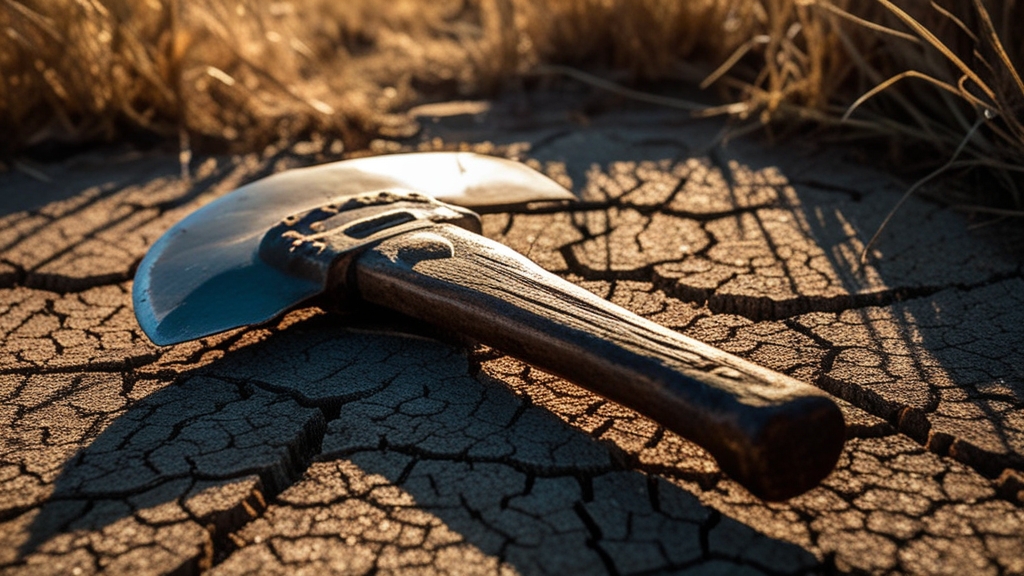
The tomahawk is probably the most misunderstood weapon in this tradition. Popular culture fixates on the thrown tomahawk — which was real and required serious skill — but the thrown technique was one part of a larger system.
In hand, the tomahawk functioned as a short-handled hatchet for hooking, chopping, and controlling. The poll (the back of the head) could strike like a hammer. The handle itself could trap a limb. Fighters used it in combination with a knife or a shield, creating a two-weapon system with complementary ranges.
Thrown tomahawks required precise distance calibration — the weapon needed to complete the right number of rotations to hit blade-first. Practitioners trained at fixed distances and adjusted their grip and release angle for range. The skill sits closer to archery than to brawling.
The Battle Lance, Plains Dagger, and Bow — Each With Its Own Fighting System
Each weapon in the Plains arsenal carried its own tactical logic:
- Battle lance: A long-reach weapon used from horseback and on foot. Mounted lance work required coordinating the horse's momentum with the strike angle — the rider wasn't just holding a stick, they were aiming a two-body projectile system.
- Plains dagger/knife: The close-quarters finisher. Knife work in Plains traditions emphasized short thrusts to vital areas and grips that prevented disarming. Many documented techniques involved the off-hand controlling the opponent's weapon arm while the knife worked inside.
- Bow and arrow: Beyond the obvious ranged role, the bow had tactical close-range applications. Drawing at short distance, the archer could release faster than a musket could be aimed. Mounted archery from a moving horse at speed remains one of the most demanding physical skills in any fighting tradition.
- Trade gun: Post-contact, European firearms entered the Indigenous weapons vocabulary. The trade gun was absorbed into existing tactical frameworks rather than replacing them. Warriors who had trained in multi-weapon transitions adapted the trade gun as one tool among several — loading it when time allowed, transitioning to hand weapons when it didn't.
| Weapon | Primary Range | Key Mechanical Feature | Tactical Role |
|---|---|---|---|
| Gunstock war club | Close | Curved geometry accelerates the head | Close-quarters impact |
| Tomahawk | Close / Thrown | Reversible grip, hookable geometry | Versatile hand weapon + ranged option |
| Battle lance | Long / Mounted | Leverages horse momentum | Shock and reach |
| Plains dagger | Extreme close | Short thrust, grip control | Finishing weapon |
| Bow and arrow | Long / Mid | Speed at short range on horseback | Ranged dominance |
| Trade gun | Long | Integrated post-contact | Ranged; transitioned to hand weapons |
Empty-Hand Traditions: Grappling, Striking, and Wrestling Across Nations
This is the section most sources skip. Weapons get documented because they survive in museums. Empty-hand methods leave fewer artifacts. But the oral record and the accounts of early ethnographers make clear that formalized unarmed combat existed across many nations.
Plains and Woodland Grappling Styles
Indigenous wrestling traditions were widespread and formal. Many nations held wrestling contests as part of social gatherings, coming-of-age ceremonies, and inter-village competitions. These weren't casual shoving matches. They had recognized holds, scoring conventions, and in some cases referees.
Plains grappling emphasized takedowns and positional control — getting your opponent off their feet on uneven terrain was a tactical priority, not just a sport goal. Woodland traditions documented by early ethnographers included joint manipulation and choke techniques alongside throws. The goal in a combat context was to create an opening for a weapon or to neutralize the opponent's weapon hand.
The detailed technical record here is thinner than we'd like. Much was suppressed during the colonial period or simply not written down by outsiders who witnessed it. What survives suggests sophisticated systems. Filling in the gaps with speculation would be dishonest.
Striking Systems and Their Anatomical Targets
Documented striking methods across several nations targeted anatomical weak points — the throat, the temple, the back of the knee, the floating ribs. These aren't random targets. They're the same vulnerability maps that appear in every effective striking tradition worldwide because human anatomy doesn't change by geography.
Open-hand strikes appear more frequently in the record than closed-fist punching, which makes mechanical sense. A closed fist is fragile against bone. An open palm, a hammerfist, or a forearm strike delivers force without the same injury risk to the striker's hand. Some documented techniques used the heel of the palm driving upward — a simple, powerful strike that requires almost no setup.
How Empty-Hand and Weapon Work Integrated in Combat
The clean line between "weapons training" and "empty-hand training" is a modern organizational convenience. In actual Plains combat, the two were inseparable. A warrior who lost his tomahawk needed to use his empty hand to control the opponent's weapon arm while drawing his knife. A grappler who got his knife trapped needed a strike to create separation.
Okichitaw's foundational philosophy reflects this directly: "All hand, foot and body mechanics are a reflection of specific Plains Cree weaponry and their respective movements." The empty-hand movement vocabulary grew from the weapon movements. The body mechanics are consistent across both. That's integrated design, not coincidence.
Okichitaw: The First Codified Indigenous Martial Art

Among all the Indigenous fighting traditions of North America, one system has been formally codified, structured for modern transmission, and recognized internationally. That system is Okichitaw.
George Lepine and the Formalization of Plains Cree Fighting
George Lepine is the founder of Okichitaw. A Plains Cree martial artist with a background in competitive judo — he represented Canada internationally — Lepine spent years drawing on his cultural heritage and his technical training to formalize the combat methods of his people into a teachable, transmissible system.
The name Okichitaw comes from the Plains Cree word for a distinguished warrior society. Lepine's work isn't reconstruction from old paintings. It's a living tradition built from cultural knowledge passed within his community, filtered through his own extensive martial arts experience. That combination — insider cultural authority plus high-level technical training — is exactly what legitimate codification requires. Think of it as the difference between a museum exhibit and a dojo. One preserves. The other transmits.
What Okichitaw Training Actually Looks Like
Okichitaw is described as "a unique, powerful, practical combat art system that uses basic but aggressive combat movements that were employed specifically throughout Plains Indigenous Warfare." The curriculum centers on the weapons covered earlier in this guide — gunstock war club, tomahawk, battle lance, plains dagger, bow, and trade gun — alongside the empty-hand mechanics that connect them.
A typical training progression moves through:
- Foundational stances and footwork rooted in Plains terrain
- Single-weapon forms and partner drills
- Weapon-to-weapon transitions
- Empty-hand applications derived from weapon mechanics
- Multi-weapon combination work
- Sparring and pressure-testing under resistance
The system is structured enough to test and grade students while remaining grounded in its cultural source. It isn't a sport art — the applications are combat-oriented throughout.
How Okichitaw Fits Into the Broader Indigenous Combat Tradition
Okichitaw is the clearest window we have into Plains Cree fighting methods but it's one nation's codified tradition, not a representative sample of all Native American combat arts. Lepine has been explicit about this. Okichitaw is Plains Cree. Other nations have their own traditions, some documented, many not.
That context matters for how you approach the system. Training Okichitaw gives you genuine access to one Indigenous fighting tradition. It doesn't give you the whole picture of Indigenous martial arts across the continent — and no honest instructor would claim otherwise.
Historical Context: How Indigenous Combat Evolved Through Conflict and Trade

Native American fighting systems didn't exist in a vacuum. They developed in response to specific social pressures, ecological conditions, and — after the 16th century — the massive disruption of European contact.
Warfare in many pre-contact Indigenous nations served purposes beyond territory. Counting coup — touching an armed enemy in battle without killing them — was recognized in Plains cultures as a higher act of bravery than killing from a distance. It required getting close enough to make physical contact with a living, armed opponent and getting away. That social valuation shaped training priorities. You needed the skill to close distance under fire, make contact, and withdraw. That's a specific and demanding tactical problem.
Raiding for horses, captives, or prestige operated differently from territorial war. Each context demanded different skills, different weapons loadouts, and different tactical approaches. Warriors who excelled in one context trained specifically for it — not unlike how a modern fighter might specialize in stand-up or ground work.
How European Contact Changed Weapons Without Erasing the Systems
The trade gun arrived in Indigenous hands at different times in different regions, broadly from the 17th century onward. Steel tomahawk heads replaced stone ones. Metal knife blades replaced flint. These material upgrades changed the tools without changing the underlying tactical frameworks.
A warrior who had trained the tomahawk's grip, range, and transition sequences for years didn't abandon that knowledge when he got a steel head instead of a stone one. The system absorbed the upgrade. The trade gun was treated the same way — a new tool integrated into existing multi-weapon doctrine rather than a replacement for everything that came before.
That adaptability is worth noting. It's the same pattern you see in Japanese sword traditions absorbing new blade technologies or European fencing schools adapting to new weapon designs. Good systems are flexible.
Suppression, Survival, and the Near-Loss of These Traditions
Colonial policy across North America actively targeted Indigenous cultural practices. Ceremonies were banned. Languages were suppressed. The residential school system — in both the United States and Canada — deliberately severed intergenerational transmission of cultural knowledge, including fighting traditions.
The survival of any Indigenous combat knowledge through this period is remarkable. Much was lost. What survived often did so because it was maintained privately, embedded in ceremony, or carried by individuals who refused to let it go. The work of practitioners like George Lepine represents not just codification but recovery — pulling threads of knowledge together before they frayed completely.
For a fuller account of how colonial policy affected Indigenous cultural transmission, the National Native American Boarding School Healing Coalition documents the institutional history in detail.
Techniques and Principles That Define Native American Combat Arts
Across the documented traditions — and acknowledging that the record is uneven — certain mechanical and tactical principles appear consistently enough to call them defining features of Native American fighting systems.
Economy of Motion and Environmental Awareness
Plains and Woodland combat happened in terrain that punished wasted movement. Uneven ground, brush, water crossings, darkness — the environment was always a factor. The footwork documented in Plains traditions reflects this: low, stable stances that keep the center of gravity close to the ground, weight distributed for quick direction changes rather than committed lunges.
Environmental awareness wasn't a soft skill — it was a tactical weapon. Knowing the ground behind you, using natural cover, positioning relative to sun angle and wind — these were trained behaviors, not instincts. Ambush-oriented movement emphasized silence and stillness before explosive action. That pattern demands specific conditioning of the nervous system as much as the muscles.
Weapon Transitions and Combination Fighting
One of the most technically demanding aspects of any multi-weapon system is the transition — moving from one weapon to another without creating a gap in your defense. Plains fighting doctrine addressed this directly. The tomahawk and knife combination, for example, required the practitioner to manage two weapons simultaneously: the tomahawk in the dominant hand for hooking and striking, the knife in the off-hand for close work.
Transition training in Okichitaw builds this capacity systematically. You don't just learn each weapon in isolation. You learn how the grip changes, how the body position shifts, and how the footwork adjusts when you move from one tool to the next. That's advanced martial arts curriculum by any standard.
The Role of Conditioning, Endurance, and Mental Preparation
Plains warriors were among the most physically conditioned athletes of their era. Accounts from the 18th and 19th centuries describe running distances that would challenge modern endurance athletes, carrying loads, and fighting at the end of long movements. Physical conditioning wasn't separate from combat training — it was part of it.
Mental preparation was equally formalized. Many nations had pre-combat ceremonial practices that served the same psychological function as modern visualization and arousal-control methods: focusing attention, managing fear, and building a committed mental state before engagement. The mechanisms differ from modern sports psychology but the functional logic is identical.
Training in Native American Combat Arts Today
If you want to train Native American combat arts — not just read about them — your options are real but limited. Here's how to approach it honestly.
Finding Legitimate Schools and Instructors
Okichitaw is the clearest starting point. George Lepine's organization maintains an official presence and has certified instructors in Canada and internationally. The official Okichitaw website at okichitaw.com is the authoritative source for finding legitimate instruction.
Beyond Okichitaw, be cautious. The space around Indigenous martial arts has attracted people with more enthusiasm than authority. Vet any instructor claiming to teach "Native American fighting" by asking:
- What specific nation's tradition does this represent?
- What is your lineage — who taught you, and what is their cultural authority?
- Are you affiliated with or endorsed by members of that community?
- What is your own background, both cultural and martial?
Vague answers to any of these questions are a red flag.
What to Expect From a Modern Class
A legitimate Okichitaw class will feel like structured martial arts training — not a cultural performance or a history lecture. You'll work footwork, weapon drills, partner exercises, and eventually sparring. The weapons are real (or realistic training replicas) and the applications are combat-oriented.
Expect to spend significant time on single-weapon fundamentals before combining weapons or working free-form. The system rewards patience. The tomahawk alone has enough mechanical depth to occupy months of focused training.
Respecting Cultural Protocols as an Outside Practitioner
This matters. These are living traditions belonging to living communities — not historical artifacts available for anyone to adopt freely. If you're not Plains Cree or from another Indigenous nation with its own combat traditions, you're training in someone else's cultural heritage. That carries responsibility.
What does that look like practically?
- Train through legitimate channels with proper lineage.
- Don't perform or teach what you've learned without authorization from your instructor.
- Don't appropriate ceremonial or spiritual elements that aren't part of the martial curriculum.
- Listen when community members set boundaries — and respect them without debate.
This isn't about gatekeeping knowledge. It's about recognizing that these traditions survived colonial suppression specifically because communities protected them. You're a guest. Act like one.
Native American Combat Arts Deserve a Seat at the Table
Native American combat arts are technically sophisticated, historically deep, and very much alive. The gunstock war club's curved geometry, the tomahawk's multi-range utility, the integrated empty-hand and weapon work of the Plains tradition — these aren't curiosities. They're the products of generations of serious practitioners solving real tactical problems in demanding environments.
Okichitaw gives us the clearest modern access point to one part of this tradition. George Lepine's work in codifying Plains Cree fighting methods deserves recognition alongside the codification efforts that produced modern judo, capoeira, or any other formalized fighting art. The work is the same. The rigor is the same. The cultural depth is the same.
What's been missing is attention. Native American fighting systems have been overlooked not because they lack sophistication but because the martial arts world has had a narrow field of vision. Expanding that view isn't charity — it's accuracy.
If you want to go deeper, start with Okichitaw's official resources. If you want the historical context, the Smithsonian National Museum of the American Indian holds primary materials that no secondary source can replace. And if you train — train with the seriousness and respect that any living tradition deserves.
FAQ
Are there any Native American martial arts?
Yes. Hundreds of Indigenous nations across North America developed formalized fighting systems with dedicated weapons, empty-hand techniques, and structured training methods. The most formally codified system available today is Okichitaw, a Plains Cree martial art founded by George Lepine. Many other traditions exist in various states of documentation and transmission.
What is Okichitaw and where can I train in it?
Okichitaw is the only formally codified and internationally recognized Indigenous martial art from North America. It's based on Plains Cree combat techniques and covers weapons including the gunstock war club, tomahawk, battle lance, plains dagger, bow, and trade gun. George Lepine founded the system and certifies instructors internationally. The official resource for finding legitimate training is okichitaw.com.
What weapons were central to Native American combat systems?
In Plains traditions, the core weapons were the gunstock war club, tomahawk, battle lance, plains dagger, bow and arrow, and — post-contact — the trade gun. Each weapon had its own fighting system and range logic. The tomahawk, for example, functioned as a hand weapon for hooking and striking as well as a thrown weapon, not just the thrown tool popular culture focuses on.
How do Native American combat arts compare to other martial arts traditions?
They share the core features of any legitimate martial art: systematic training, codified technique, and intentional transmission across generations. The Plains tradition's integrated weapon-to-weapon transitions and environmental awareness are technically sophisticated by any standard. The main difference is that formal codification happened much later — with Okichitaw in the modern era — partly because colonial suppression interrupted transmission.
Is it culturally appropriate for non-Indigenous people to train in these arts?
Training through legitimate channels with a properly authorized instructor is generally appropriate. What matters is training through proper lineage, not appropriating ceremonial or spiritual elements outside the martial curriculum, and respecting boundaries set by the community. These are living traditions, not historical artifacts, and non-Indigenous practitioners are guests in someone else's cultural heritage.
What Native American combat arts techniques are documented and taught today?
Okichitaw documents and teaches Plains Cree weapon techniques — gunstock war club, tomahawk, lance, dagger, bow, and trade gun — alongside empty-hand mechanics derived from those weapon movements. Grappling traditions including wrestling and joint manipulation are documented across multiple nations in ethnographic records, though the detailed technical record for empty-hand methods is thinner than for weapons.