
Master Sword Fighting Tactics: Complete Combat Guide


What separates a skilled swordsman from someone just swinging metal around? The answer lies in understanding sword fighting tactics—the strategic approaches that transform raw technique into effective combat ability. Whether you're a modern collector interested in historical weapon training, a HEMA practitioner seeking to refine your skills. A martial artist exploring traditional blade work, mastering tactical principles will elevate your swordsmanship to new levels. This comprehensive guide explores everything from fundamental principles to advanced deception techniques, giving you the knowledge needed to understand this ancient art.
- Understanding Sword Fighting Tactics – The Foundation
- Basic Sword Fighting Principles and Characteristics
- deception techniques in sword fighting tactics
- stance and positioning – the foundation of tactical sword fighting
- Sword Training Drills and Practice Methods
- Mental Preparation and Real Sword Fighting
- Safety Fundamentals and Injury Prevention
- Conclusion: Your Journey in Sword Fighting Tactics
Understanding Sword Fighting Tactics – The Foundation
What Are Sword Fighting Tactics and Why They Matter
Sword fighting tactics represent the strategic decision-making process that governs when, where. How you execute techniques during combat. Unlike simple technique—which focuses on the mechanics of how you swing, parry, or thrust—tactics encompass the reasoning behind each movement. Think of technique as your vocabulary and tactics as your ability to construct meaningful sentences. The fundamental objective remains constant across all sword fighting traditions: deliver a fight-ending blow without taking one yourself.
Many beginners confuse footwork drills with tactical understanding. They practice stepping patterns religiously but fail to comprehend why those movements matter in actual combat; Tactical sword fighting bridges this gap by connecting physical movements to strategic outcomes. Modern applications extend beyond historical reenactment—HEMA competitions, sport fencing, and traditional Japanese martial arts all require tactical thinking to succeed against skilled opponents.
The Fundamental Principles of Successful Sword Fighting Tactics
Successful sword fighting principles rest on several interconnected pillars that work together to create tactical advantage. In fact, physical conditioning forms the foundation—without adequate strength, endurance, and coordination, even brilliant tactical ideas fail during execution. Your muscles need stamina to maintain guard positions through extended exchanges, while explosive power enables decisive strikes when openings appear.
Mental awareness separates competent fighters from exceptional ones. You must simultaneously track your opponent's blade position, read their body language, monitor distance, and process tactical options—all while managing your own movements. This situational consciousness develops through consistent sword training and cannot be rushed.
Simply put,
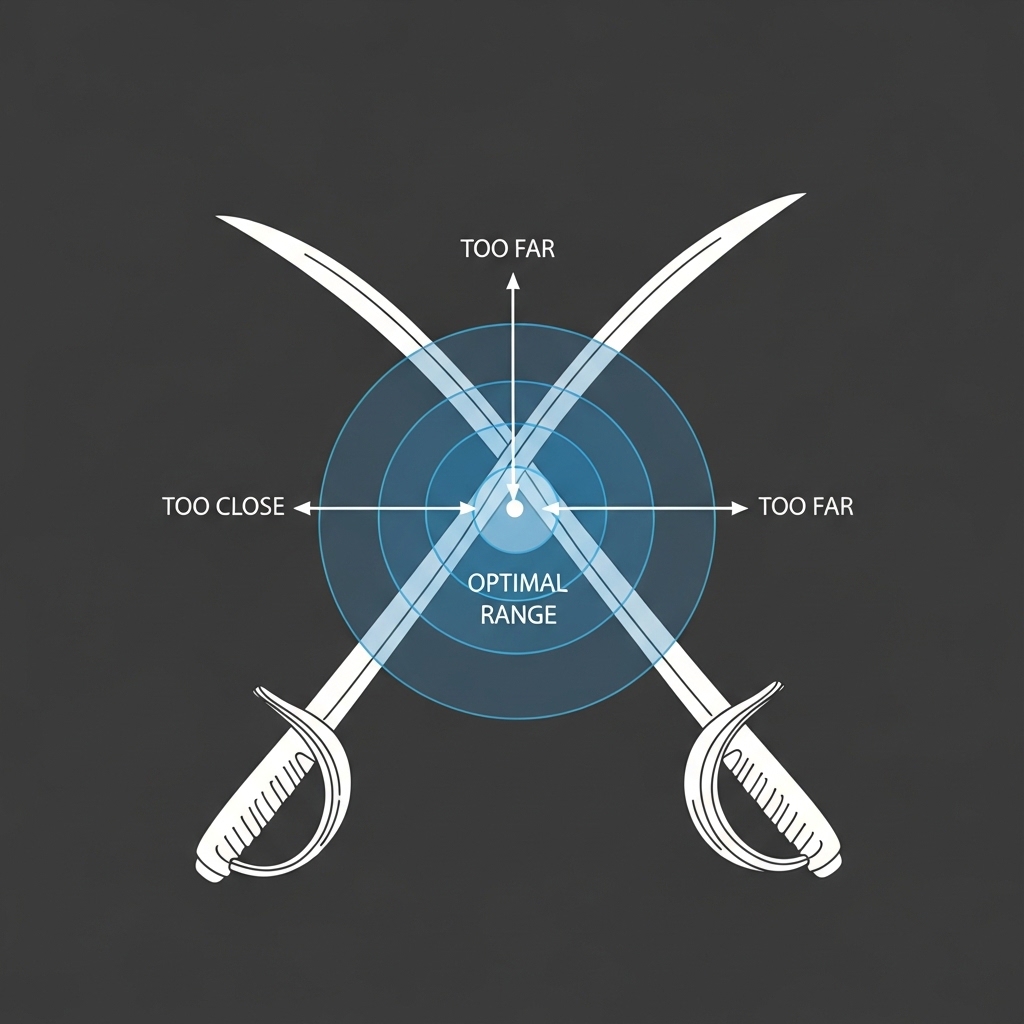
Timing and distance serve as the two pillars of tactical execution. Perfect technique executed at the wrong moment or from incorrect range becomes worthless. Legendary swordsman Miyamoto Musashi emphasized in the Book of Five Rings that understanding rhythm—both your own and your opponent's—creates opportunities for decisive action. Unpredictability prevents opponents from anticipating your movements, while confidence affects how aggressively you can execute tactical plans.
Balance and stability provide the physical foundation enabling all tactical options. Without stable footing, you cannot generate power, change direction quickly, or maintain defensive positions under pressure. These principles apply universally across Eastern sword arts, Western martial arts, and modern competitive fencing.
Historical Evolution of Sword Fighting Tactics
The development of sword fighting tactics mirrors the evolution of warfare itself. Medieval European combat emphasized powerful cuts delivered from longsword techniques, with tactics focused on breaking through armor and overwhelming opponents through strength. Renaissance fencing masters like Fiore dei Liberi and Johannes Liechtenauer documented sophisticated systems in their manuscripts, revealing tactical complexity that modern HEMA practitioners continue studying today.
Japanese martial arts developed parallel tactical systems around the katana, emphasizing precise cutting angles, decisive single strikes, and psychological dominance. Chinese swordsmanship with the jian (straight sword) and dao (curved sword) incorporated flowing movements and continuous pressure tactics. Each tradition responded to specific cultural contexts, available materials. Battlefield requirements, yet fundamental tactical principles—distance management, timing, deception—appear universally.
the modern revival through hema (historical european martial arts) combines historical research with practical application, testing medieval and renaissance techniques through controlled sparring and tournament competition. This approach reveals which historical tactics work effectively and which existed primarily as theoretical constructs.
Basic Sword Fighting Principles and Characteristics
The Eight Angles of Attack in Sword Fighting Tactics
Understanding the eight main angles of attack forms the foundation of tactical offence. These angles represent the primary paths your blade can travel to reach an opponent:
- Overhead cuts: Descending strikes targeting the head and shoulders, offering maximum power but telegraphing intention
- Diagonal descending cuts: Right and left angles targeting neck, shoulder. Now, torso regions
- horizontal cuts: side-to-side strikes at various heights, enabling quick combinations
- ascending cuts: upward strikes targeting arms, torso, and chin from below
- thrust attacks: linear strikes offering maximum reach and precision
tactical mastery requires understanding not just how to execute each angle but when each proves most effective. Overhead cuts deliver devastating power but leave you exposed during wind-up. Thrusts offer reach advantages but require precise blade alignment and distance judgment. Combination angles—chaining multiple strikes together—create continuous pressure that overwhelms defensive responses.
The Five Main Defensive Counters in Sword Fighting Tactics
Effective defensive sword techniques provide the foundation for survival and counterattacking opportunities. The five main defensive approaches include:
- Parrying. Blocking: using your blade to deflect incoming attacks
- evasion through footwork: moving your body outside attack range
- distance management: maintaining safe spacing as primary defense
- counter-attacking: striking simultaneously with or immediately after defending
- combination responses: blending multiple defensive methods together
strategic defense involves more than reactive responses. Anticipating attacks through opponent observation, controlling engagement distance, and maintaining defensive awareness while executing offensive techniques all contribute to tactical survival. The best defense often involves never allowing your opponent to establish their preferred attacking rhythm.
Characteristics of Effective Sword Fighters
Successful practitioners of sword fighting tactics share common characteristics that extend beyond physical ability. Mental toughness enables maintaining composure when facing aggressive opponents or recovering from mistakes. Awareness—both of self and opponent—allows reading subtle cues that telegraph intentions before attacks fully develop.
Calmness under pressure separates trained fighters from panicked beginners. Combat breathing techniques help manage adrenaline responses, maintaining fine motor control and tactical decision-making capability. Adaptability allows adjusting tactical approaches mid-fight based on what you're learning about your opponent's patterns. Tendencies.
rhythm recognition—understanding the tempo of exchanges—creates opportunities to disrupt opponent timing through unexpected accelerations or deliberate pauses. Intimidation management prevents psychological domination, maintaining confidence even against seemingly superior opponents. Respect for the discipline. Proper martial arts etiquette ensures safe training environments where tactical skills can develop.
deception techniques in sword fighting tactics
feinting as core tactical deception
deception tactics multiply your effective options by forcing opponents to react to threats that don't materialize as expected. Feinting—the art of initiating one attack to provoke a defensive response, then exploiting the opening created—forms the foundation of tactical deception. A properly executed feint appears identical to a committed attack until the final moment, making it impossible for opponents to distinguish real threats from false ones without gambling on their guess.
Consider this practical example: You initiate what appears to be a full-power overhead strike targeting your opponent's head. They raise their blade high to parry, elevating their guard and exposing their lower body. At the last moment, you abort the overhead strike and deliver a quick kick to their lead leg or a low cut to their thigh. This feigned overhead strike with unexpected low-line follow-up exemplifies how feints and tricks create openings that wouldn't otherwise exist.
Another effective approach involves launching a genuinely strong attack—perhaps a powerful forehand cut—then immediately transitioning to an unexpected leg strike when your opponent commits fully to defending the initial threat. The key lies in selling the first attack convincingly enough that defensive responses become automatic rather than measured.
Let's be real:
Advanced Deception Tactics
Binding tactics—using blade contact to control your opponent's weapon—enable sophisticated deception by creating physical reference points that mislead. Now, when blades connect, experienced fighters instinctively feel pressure and direction. You can manipulate this sensitivity by suddenly releasing pressure, changing angles, or transitioning to unexpected attacks from the bind.
Speed variation serves as powerful tactical deception. Establishing a consistent rhythm—perhaps through several measured exchanges—then suddenly accelerating or deliberately pausing disrupts opponent timing. They anticipate continuation of established patterns, leaving them vulnerable when you break those expectations. This principle appears throughout Miyamoto Musashi's teachings about rhythm. Timing in combat psychology.
stance and positioning – the foundation of tactical sword fighting
why your stance determines your tactical options
your stance and posture (called "guardia" in italian traditions) determines which tactical options remain available at any moment. Proper stance enables faster reactions by pre-positioning your body for likely responses. The relationship between stance and defensive capabilities proves direct—certain positions naturally protect specific target areas while leaving others exposed.
Common stance mistakes limit tactical flexibility dramatically. Standing too upright reduces stability and slows directional changes. Excessive tension wastes energy and telegraphs intentions, improper weight distribution prevents quick footwork adjustments. And each flaw cascades through your tactical capabilities, transforming theoretical knowledge into practical limitations.
Main Sword Fighting Stances Explained
Different sword fighting posture options serve distinct tactical purposes:
The on-guard position provides balanced readiness, positioning your blade to threaten while maintaining defensive coverage; This neutral stance enables quick transitions to either offense or defense, making it ideal for feeling out opponents during initial exchanges.
High guard positions (Ochs in German traditions) place your blade elevated, point threatening opponent's face or throat. So This aggressive stance pressures opponents psychologically while creating strong angles for descending cuts. However, it exposes your lower body to quick attacks.
Low guard positions (Pflug) offer defensive advantages by protecting your centerline while maintaining thrust capability. Counter-attacking from low guards often surprises opponents expecting upward strikes. One-handed sword and buckler combinations modify these stances by adding shield protection, fundamentally altering tactical calculations.
Sword Training Drills and Practice Methods
Essential Training Methods for Tactical Development
Sword training drills develop the physical and mental capabilities required for tactical execution. Solo exercises build muscle memory, allowing techniques to emerge automatically under pressure without conscious thought. Practice cutting patterns through air, focusing on proper blade alignment, body mechanics, and smooth transitions between techniques.
Hand-eye coordination exercises prove critical for tactical sword fighting. In fact, try tracking moving targets with your blade tip, maintaining point control while stepping in various directions, or practicing precision touches on specific targets. These drills translate directly to combat effectiveness by improving your ability to deliver strikes exactly where intended.
Partner exercises introduce realistic timing and distance challenges. Yet Start with slow, cooperative drills where partners alternate between designated attacker and defender roles. Progress gradually toward free-flowing exchanges as both participants develop control and understanding. Combat drills should emphasize safety while maintaining sufficient intensity to stress-test tactical concepts.
Test Cutting. Practical application
test cutting (tameshigiri in japanese traditions) provides objective feedback about technique quality. Cutting targets like tatami mats, pool noodles, or water-filled bottles reveals whether your blade alignment, edge geometry, and body mechanics function correctly. Now, poor cuts that fail to slice cleanly indicate technical problems requiring correction.
Suitable cutting materials for backyard cutting practice include rolled tatami mats (traditional), thick bamboo stalks, or specially designed synthetic targets. Always prioritize sword safety during cutting practice—ensure adequate space, secure footing, and appropriate protective equipment. Sharp blades demand respect and careful handling to prevent injuries.
Mental Preparation and Real Sword Fighting
Combat Breathing and Psychological Preparation
Mental preparation for combat separates theoretical knowledge from practical application. Your nervous system responds to perceived threat with adrenaline dumps that affect fine motor control, decision-making speed, and tactical awareness. Combat breathing techniques—controlled respiratory patterns that manage physiological stress responses—help maintain composure under pressure.
Practice box breathing: inhale for four counts, hold four counts, exhale four counts, hold four counts, repeat. This pattern activates parasympathetic nervous system responses that counteract fight-or-flight reactions. Incorporate breathing practice into training drills until it becomes automatic during stressful moments.
The historical reality of sword combat involved life-or-death consequences that modern practitioners cannot fully replicate. However, tournament pressure, sparring intensity, and mental conditioning can approximate the psychological demands of realistic sword combat. Developing warrior mentality requires consistent exposure to controlled stress, gradually building confidence in your tactical abilities.
Safety Fundamentals and Injury Prevention
Essential Safety Equipment and Practices
Sword safety considerations must govern all training activities. That said, protective equipment including fencing masks, padded gloves, gorgets (throat protection), and body protection prevents serious injuries during sparring. HEMA practitioners typically use specialized gear designed for historical weapon training, while Japanese martial arts employ different protective standards appropriate to their techniques.
Training swords versus sharp blades serve different purposes. Synthetic or blunt steel trainers enable full-speed sparring without lethal risk. Sharp blades reserved for solo practice and test cutting demand extreme caution and controlled environments. Never spar with sharp weapons—the injury risk far outweighs any potential training benefit.
Rules of conduct and martial arts etiquette create safe training environments. And respect training partners, control strikes appropriately, communicate clearly about intensity levels, and stop immediately when anyone signals distress. These practices enable productive learning while minimizing sword injuries.
Conclusion: Your Journey in Sword Fighting Tactics
Mastering sword fighting tactics requires integrating physical technique, mental awareness, and strategic thinking into cohesive combat ability. This journey extends beyond simply learning movements—it demands understanding why those movements matter, when to apply them, and how they interconnect within larger tactical frameworks. Whether your interest lies in historical martial arts, competitive fencing. Personal development through traditional weapon training, tactical principles provide the foundation for continued growth.
start with fundamental principles: proper stance, basic attacks and defenses, essential footwork patterns. Build progressively toward more complex tactical concepts as your physical capabilities and understanding deepen. Seek quality instruction through HEMA groups, traditional martial arts schools, or experienced practitioners who can provide personalized feedback. Remember that safety always takes priority—protective equipment and controlled training environments enable long-term development without unnecessary risk.
The path of swordsmanship offers rich rewards: improved physical fitness, enhanced mental discipline, connection with historical traditions, and membership in supportive communities of fellow practitioners. Embrace patience and continuous learning—tactical mastery develops gradually through consistent practice, thoughtful reflection, and willingness to adapt your understanding as experience accumulates. Your sword fighting journey awaits.
Frequently Asked Questions
What is the difference between sword fighting technique and tactics?
Technique refers to how you physically execute movements (stance, grip, cut mechanics), while tactics are the strategic decisions of when, where, and why to use those techniques against an opponent.
What does HEMA stand for?
HEMA stands for Historical European Martial Arts, a modern revival and study of European combat systems based on historical manuals and primary sources from medieval and Renaissance periods.
How important is timing and distance in sword fighting?
Timing and distance are fundamental pillars of sword fighting tactics. Proper distance management (staying outside striking range until the right moment) combined with perfect timing determines whether your attacks succeed and your defenses hold.
an I learn sword fighting tactics from books or must I train in person?
While books and videos provide valuable theoretical knowledge and understanding of principles, in-person training with qualified instructors is essential for developing proper muscle memory, timing, and the ability to respond to live opponents.
What are the eight angles of attack in sword fighting?
The eight angles include: overhead cuts, forehand cuts, backhand cuts, thrusts, low-line attacks, high-line attacks, combination angles, and chained strikes that provide comprehensive coverage of possible attack vectors.