
Viking Swordsmanship: Techniques, Tactics, and the Real Fighting System

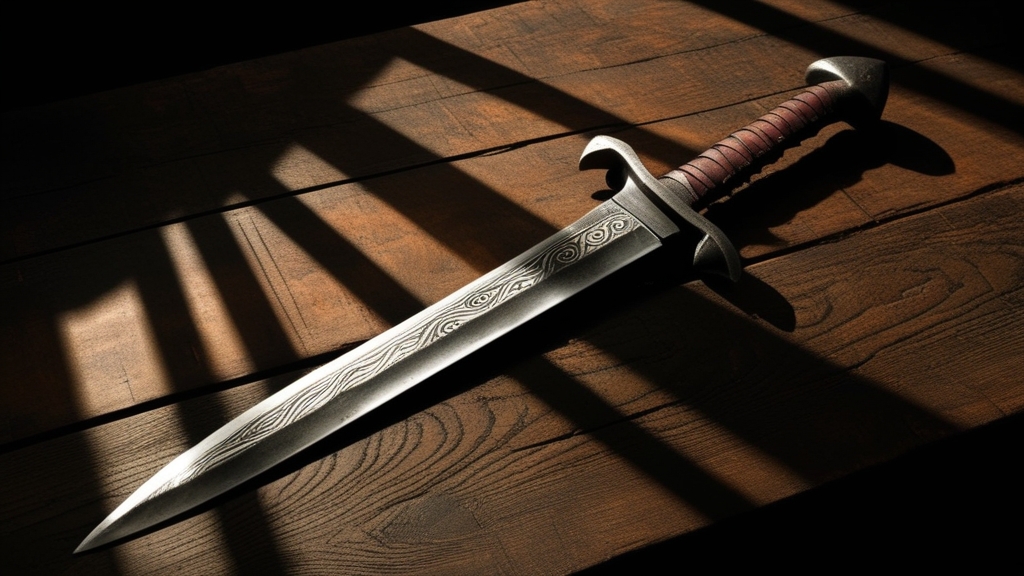
Owning a sword in the Viking Age was the equivalent of owning a luxury car today — only the wealthy and the professional warrior class could afford one. That single fact dismantles most of what popular culture tells you about Viking sword fighting. This wasn't a weapon every raider pulled from a longship. It was a precision instrument, carried by men who trained seriously with it and the system built around it was far more sophisticated than the berserker-chaos image Hollywood keeps selling. This guide breaks down Viking swordsmanship — its mechanics, its tactics, its cultural context, and how you can train in it right now.
- The Sword That Built a Reputation
- The Core Principles of Viking Swordsmanship
- Strikes, Cuts, and Thrusts: Breaking Down the Viking Sword Techniques
- Tactics in the Shield Wall and Single Combat
- Glíma and the Broader Viking Martial Tradition
- Training Like a Viking Warrior: Then and Now
- Common Myths About How Vikings Actually Fought
- What Viking Swordsmanship Teaches Modern Martial Artists
- Frequently Asked Questions
- FAQ
The Sword That Built a Reputation
Before you can understand how Vikings fought with swords, you need to understand what the sword actually was — physically and socially. The gap between the real weapon and the movie prop is enormous.
What Made the Viking Sword Distinct
The Viking Age sword — roughly spanning the 8th through 11th centuries — was a double-edged, single-handed weapon typically between 70 and 80 centimeters in blade length. The cross-guard was short and functional, not ornate. The pommel, often lobed or tea-cosy shaped, served as a counterbalance that kept the point of balance close to the hilt, making the sword fast in the hand rather than tip-heavy.
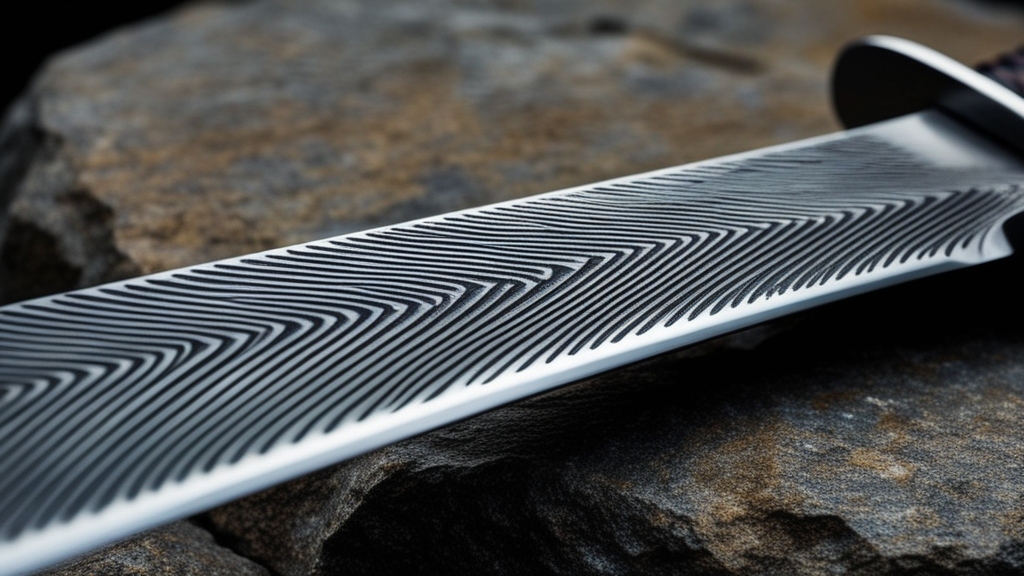
Many high-status examples were pattern-welded: smiths twisted and folded iron rods of different carbon content together, then forge-welded them into a blade. The result was a visible rippling pattern in the steel — beautiful, yes, but also structurally deliberate. The twisted core provided resilience while harder edge steel held a sharper, more durable cutting edge. These weren't decorative flourishes. They were engineering.
The blade geometry matters for technique. The relatively wide, flat blade excelled at broad cutting strokes. The taper toward the point — more pronounced on later Viking Age examples — made thrusting increasingly viable as the period progressed. This is a weapon designed for a one-handed grip paired with a shield, not a two-handed behemoth.
Who Actually Carried One — and Why It Mattered
As noted by practitioners studying period sources, the sword was "an equivalent of a quality car back in the Dark Ages, and only the rich and the professionals could afford one." This wasn't a peasant's weapon. Axes, spears, and seaxes (single-edged utility knives scaled up to fighting size) were the common man's tools of war.
The sword's social exclusivity shaped how it was trained with and used. A man who owned a sword had the resources and status to invest in learning it properly. Saga literature repeatedly distinguishes between skilled swordsmen and those merely swinging sharp metal. Níðingr — a term of deep shame in Norse culture — could be applied to a warrior who fought clumsily or dishonorably. There was a code and technique was part of it.
This matters because it tells us Viking sword fighting was a practiced martial system, not improvised violence.
The Core Principles of Viking Swordsmanship
Strip away the mythology and you find a combat system built on economy, integration, and geometry. These principles are what separate trained swordsmanship from a brawl.
Economy of Motion: Why Vikings Didn't Fight Like Movie Characters
Big looping swings look great on screen and get you killed on the ground. Real Viking sword fighting looked nothing like the exhausting spectacle Hollywood serves up. Economy of motion was essential. A large swing exposes your flank, takes time to recover, and burns energy fast. Period sources and modern HEMA reconstruction both point toward compact, efficient mechanics.
The basic cutting stroke drove from the shoulder and hip together — not just the arm. Hip drive loaded power into the strike without telegraphing the motion. Weight transferred forward into the cut, then immediately reset. Think of it less like swinging a bat and more like a sharp, committed push with a sharp edge attached.
The guard position in period imagery tends to be relatively low and close to the body, shield forward. This is a defensive-first posture that conceals your sword arm and forces your opponent to come to you.
The Role of the Shield as an Offensive Weapon
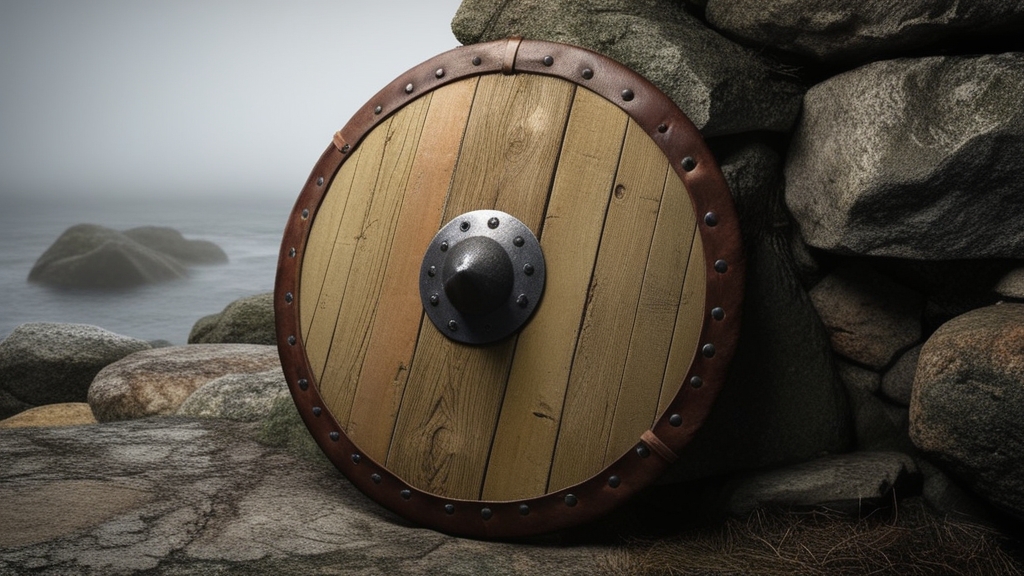
This is where most casual accounts of Norse martial arts go completely wrong. The shield wasn't passive protection. It was half your weapons system.
The shield boss — the iron dome at the center — was a striking tool. Driving it into an opponent's face, throat, or weapon arm disrupted their attack and created openings. Shield edges could hook an opponent's weapon or limb. A sharp forward punch with the shield could off-balance a man enough to open a killing line for the sword.
The sword-and-shield system worked as an integrated unit:
- Shield leads — intercepts or deflects the incoming strike
- Simultaneous counter — the sword fires into the opening the shield creates
- Follow-through — close distance, use the shield to control the opponent's weapon arm
- Finish — a second cut, a thrust, or a transition into grappling
None of these steps work in isolation. Training one without the other is like learning to box with one hand tied.
Footwork, Positioning, and the Geometry of a Duel
Position determined survival. Stepping offline — moving to your opponent's weapon-side or shield-side at an angle — changed the geometry of the exchange entirely. Move to their weapon-side and you force them to cross their body to reach you. Move to their shield-side and you've flanked their primary defense.
Measure (the Italian term; Norse practitioners would have understood the concept without the word) — the precise distance at which you can strike and be struck — was constantly managed. Closing distance aggressively was a core tactic. At long range, your opponent can see your sword move and react. At close range, the shield boss and the grapple become live options and reaction time collapses.
Footwork was small, grounded, and purposeful. Wide stances or crossed feet were liabilities.
Strikes, Cuts, and Thrusts: Breaking Down the Viking Sword Techniques
The sword was described by period-informed practitioners as allowing "a wide variety of techniques, most of which other weapons have great trouble duplicating." Here's what those techniques actually looked like.
The Primary Cutting Lines and How to Execute Them
The diagonal downward cut was the workhorse of Viking sword fighting — driven from the high outside line toward the opponent's neck, shoulder, or sword arm. Gravity assists the blade, hip rotation drives the power, and the angle makes it difficult to block cleanly without your shield being in exactly the right position.
Key cutting lines in the Viking sword system:
| Cut | Line | Primary Target |
|---|---|---|
| Diagonal downward (Oberhau equivalent) | High outside to low inside | Neck, shoulder, sword arm |
| Rising cut | Low inside to high outside | Wrist, elbow, underarm |
| Horizontal draw cut | Across the centerline | Abdomen, thigh |
| Forehand diagonal | High inside to low outside | Opposite shoulder, neck |
The rising cut deserves special attention. Delivered from below the opponent's shield line — targeting the wrist or inner elbow of the sword arm — it's difficult to see coming and hard to block without dropping the shield. Saga accounts describe warriors losing sword hands, suggesting this cut was well-known and feared.
Thrusting with a Viking Sword — Underrated and Deadly
Many people assume Viking swords were purely cutting weapons because of the rounded tips on some early examples. Partly true — but only partly. Later Viking Age swords show more pronounced taper and sharper points as armor evolved and the thrust became more tactically necessary.
More importantly, even a moderately pointed tip is lethal when driven with full body weight behind it. The thrust in sword and shield fighting was typically delivered at close measure after a shield deflection — a short, driving extension that covered the centerline while the shield controlled the opponent's weapon. It required less wind-up than a cut and was harder to see in time.
Saga literature records numerous deaths by thrusting, which tells you practitioners knew how to use it.
Half-Swording and Close-Quarter Grappling
When blades bind and distance collapses, the fight changes character entirely. This is where the Viking warrior's broader skill set came in.
Blade binding — where both weapons are in contact and neither fighter can freely swing — was a transition point, not a stalemate. From the bind, you could:
- Drive your pommel into the opponent's face
- Hook their leg with your foot and throw
- Grab their sword arm with your shield hand and control it
- Transition to a seax draw at contact range
Saga accounts describe wrestling moves, trips, and throws occurring mid-fight with swords in hand. This wasn't accidental — it was trained. The boundary between armed and unarmed combat was fluid. A warrior who froze when blades bound was a warrior who died.
Tactics in the Shield Wall and Single Combat
Viking swordsmanship tactics shifted dramatically depending on context. Battlefield combat inside a shield wall demanded entirely different behavior than a formal one-on-one duel.
How the Shield Wall Changed Individual Sword Use
Inside a shield wall, individual sword technique became constrained. You had allies on both sides and an enemy formation inches away. Big cuts were dangerous to your own men. Thrusts into the gaps between shields, targeted cuts at exposed ankles and shins, and shield-boss punches into the opposing line were the primary tools.
The sword's role in the shield wall was opportunistic and precise — not the flowing, mobile system you'd use in open ground. Warriors in the front rank needed tremendous physical endurance and the mental discipline to make small, accurate strikes under extreme pressure rather than panic-swinging.
Breaking the opposing shield wall often came from the flanks, where mobile warriors could attack the formation's edge and cause it to collapse. That's where the full sword-and-shield system came back into play.
One-on-One Dueling: The Hólmganga Tradition
The hólmganga was a formalized dueling system with codified rules — one of the most significant gaps in most accounts of Viking combat. The word translates roughly as "going to the island" — duels were often fought on a small, bounded piece of ground (sometimes literally a small island or a marked-off cloak on the ground) to prevent either fighter from retreating.
Rules varied by region and period but typically included:
- A fixed number of shields per combatant (often three)
- Alternating strikes rather than simultaneous attack
- A defined boundary — stepping outside it could mean forfeiture or social disgrace
- The option to send a champion in your place
The hólmganga appears repeatedly in Icelandic sagas as a mechanism for settling disputes over property, honor, and accusations of cowardice. It was legally recognized. Egil's Saga, Kormáks saga, and others describe duels in enough detail to give us real tactical information — including the importance of reading your opponent's rhythm, feinting to provoke a committed response, and timing your own strike into the recovery.
Reading Your Opponent — Feints, Baits, and Timing
Saga literature is surprisingly candid about the cognitive dimension of sword fighting. Warriors watch their opponent's eyes, shoulders, and weapon hand for tells — the shoulder dip before a swing, the weight shift that commits to a step. A feint works only if your opponent believes it's real, which means you have to understand their threat assessment well enough to manipulate it.
Timing was the master skill. A strike launched at the exact moment your opponent's weight is committed forward — mid-step, mid-swing — arrives before they can redirect. The Icelandic sagas use the term skjaldborg (shield fortress) to describe defensive formation but individual duelists also built their own conceptual fortress: controlled, patient, waiting for the opening rather than forcing it.
This is not berserker fighting. It's chess with sharp edges.
Glíma and the Broader Viking Martial Tradition
Glíma is the Norse wrestling tradition and understanding it is essential to understanding Viking swordsmanship as a complete system rather than an isolated skill.
What Glíma Actually Is — and Its Relationship to Armed Combat
Glíma is a standing grappling art characterized by specific grip positions, trips, and throws. The most traditional form — lausatök (loose grip) — allowed grabbing anywhere on the body and emphasized off-balancing through footwork and leverage. Other regional forms used fixed belt grips.
The misconception worth correcting: glíma was not purely a sport or a game. Saga sources show it was part of warrior conditioning. The physical and technical skills it developed — balance, grip strength, the ability to off-balance an opponent while staying rooted yourself — transferred directly to armed combat. A man who could throw you in glíma could throw you when you both had swords in your hands.
For more on Norse martial culture and its documented traditions, the Wikipedia entry on glíma provides a useful starting overview, though primary sources in the sagas go considerably deeper.
Wrestling, Weapons, and the Integrated Warrior Skill Set
The Viking warrior's training was never siloed. Sword work, spear work, axe work, glíma, swimming, and riding were all part of a single warrior identity. Saga heroes are praised for excellence across all these domains — a man who was a superb swordsman but a poor wrestler was considered incomplete.
This integration has a direct tactical payoff. The trips and sweeps from glíma work from the inside measure of a sword fight. The hip mechanics of a good throw are the same hip mechanics behind a powerful cut. Training one sharpens the other. Modern HEMA practitioners who cross-train in wrestling consistently report improvement in their armed sparring — the same logic the Vikings were apparently working from a thousand years ago.
Training Like a Viking Warrior: Then and Now
Period sources give us more information about Viking warrior training than most people realize. And modern HEMA Viking reconstruction has built on those sources systematically.
How Warriors Trained in the Viking Age
Saga literature and later Scandinavian sources describe several training methods:
- Pell work: Striking a post or wooden target to develop cutting mechanics and conditioning — the same method Roman legionaries and later medieval knights used
- Sparring: Competitive practice bouts, sometimes with blunted weapons, sometimes with full contact and the expectation of injury
- Games and contests: Swimming races, horse fights, glíma tournaments, and weapon-throwing competitions were all understood as warrior conditioning
- Voyage and labor: The physical demands of rowing, sailing, and raiding built the endurance base that combat required
Saxo Grammaticus, the 12th-century Danish historian whose Gesta Danorum records Norse heroic tradition, describes warriors practicing specific weapon skills as part of their regular preparation. The Icelandic sagas — particularly Egil's Saga, Njál's Saga, and Laxdæla saga — contain detailed enough fight descriptions to reconstruct tactical principles.
Modern Historical European Martial Arts (HEMA) and Viking Swordsmanship
Historical European Martial Arts is the umbrella term for the scholarly and physical reconstruction of European fighting systems from period sources. Viking swordsmanship sits within this tradition, though it presents specific challenges: unlike later medieval German or Italian systems, we don't have dedicated fighting manuals (the Fechtbücher tradition starts in the 13th century). Practitioners work primarily from:
- Icelandic saga fight descriptions
- Archaeological evidence (sword types, shield construction, armor)
- Comparative analysis with contemporaneous systems
- Physical experimentation with accurate replica equipment
Organizations like the Hurstwic group in the United States have done serious reconstructive work on Viking Age combat and their research is widely cited in the HEMA community.
Where to Start If You Want to Train Today
If you want to train in Viking sword fighting, here's a realistic starting path:
- Find a HEMA club — most cities have one. Look for groups that specifically work on Viking Age material or Norse martial arts alongside broader HEMA curricula.
- Get basic protective gear — a good mask, gloves, and a jacket rated for sparring. Don't skip this.
- Start with a synthetic waster — a durable training sword that approximates the weight and balance of a Viking sword without the injury risk of steel.
- Read primary sources — the Icelandic sagas are available in excellent English translations. Read them as tactical documents, not just literature.
- Cross-train in grappling — any standing wrestling art (judo, sambo, even folk wrestling) will accelerate your understanding of the close-quarter dimension.
Common Myths About How Vikings Actually Fought
Few martial traditions carry more pop-culture baggage than Norse combat. Let's clear some of it out.
The Berserker Myth: Rage Is Not a Fighting Style
The berserkr — the frenzied warrior who fought in an animal-skin and felt no pain — appears in sagas and skaldic poetry. They were real, in the sense that some warriors cultivated extreme psychological states before battle. What they were not was an effective individual fighting system.
Rage eliminates the cognitive dimension of combat: the reading of opponents, the timing of feints, the management of distance. A berserk fighter is predictable, exhausts quickly, and ignores defensive fundamentals. Saga literature actually reflects this — berserkers are often portrayed as brutal and dangerous but also as characters who get killed by skilled, composed opponents. The berserk state was a battlefield intimidation tool, not a technical fighting method.
Confusing berserker behavior with Viking swordsmanship is like confusing a bar fight with boxing.
Two-Handed Swords, Axes, and Why Hollywood Gets It Wrong
Two-handed great swords — the massive claymores and zweihänders of popular imagination — are a late medieval development, not a Viking one. They appear from roughly the 14th century onward. Attributing them to Viking warriors is a chronological error of several hundred years.
Axes were certainly used by Vikings — the bearded axe (skeggøx) was a common and effective weapon. But the saga literature and archaeological record both show that among the warrior elite, the sword was the prestige weapon and the primary tool of serious single combat. The axe's prominence in modern Viking imagery likely comes from its visual drama and the fact that axes were more common and affordable — but common doesn't mean primary.
What Viking Swordsmanship Teaches Modern Martial Artists
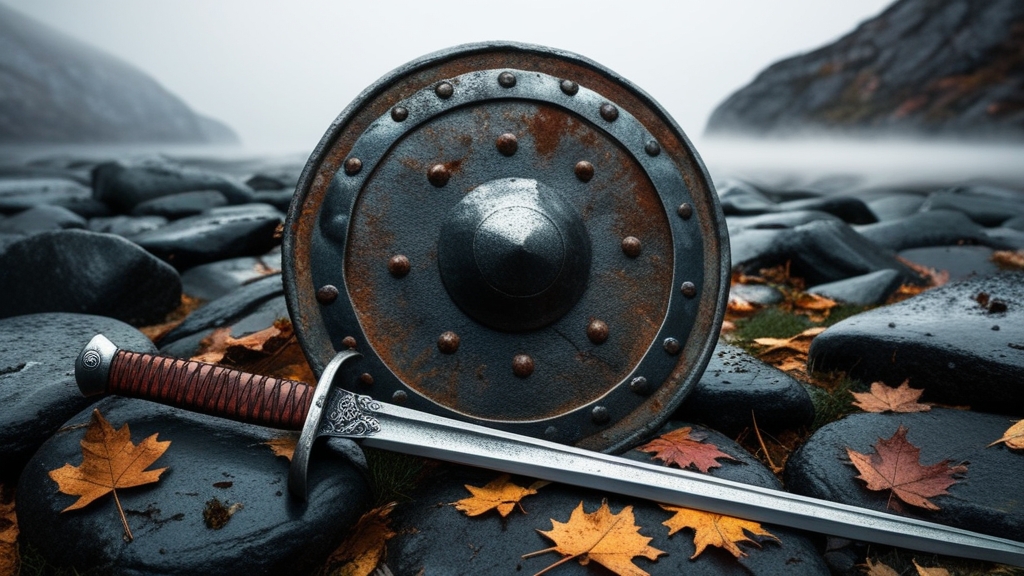
Studying Viking swordsmanship isn't antiquarianism. The principles it encodes are alive in every effective fighting system.
Principles That Transfer Across Fighting Systems
The core lessons of Viking sword fighting map cleanly onto modern martial arts:
- Distance management — the same measure-control that determined survival in a hólmganga determines who gets hit in kickboxing
- Weapon-and-shield integration — any system that uses both hands (trapping in Wing Chun, the jab-cross relationship in boxing) operates on the same integrated-unit logic
- Cognitive fighting — reading tells, baiting responses, timing your strike into a committed opponent: this is as relevant in MMA as it was in a 10th-century duel
- Grappling transitions — the fluid boundary between striking and grappling that Viking warriors trained is the same boundary that modern fighters navigate in a clinch
Why Studying Historical Swordsmanship Makes You a Better Fighter
Training with a sword forces precision in a way that unarmed practice sometimes doesn't. The consequences of a mistimed cut, an exposed flank, or a misjudged measure are immediately obvious when your training partner is holding a meter of steel. That clarity sharpens everything.
Viking swordsmanship also demands you think about the weapon as a system — not just the blade, but the shield, the footwork, the grapple. That systems-thinking transfers. A fighter who understands how tools integrate fights smarter regardless of what's in their hands.
The real Viking sword fighter wasn't a chaos engine. He was a trained, disciplined practitioner of a sophisticated martial system who happened to live in a brutal age. Understanding that system — its economy, its geometry, its cognitive demands — is worth your time whether you're a HEMA practitioner, a martial artist from any tradition, or simply someone who wants to understand what human beings have figured out about fighting over a thousand years of hard experience.
Find a HEMA club, pick up a translation of Egil's Saga, and get your hands on a training sword. The system is there, waiting to be learned.
Frequently Asked Questions
FAQ
What fighting style did Vikings use?
Vikings used an integrated sword-and-shield system built on economy of motion, distance management, and the offensive use of the shield boss. It wasn't a single codified style but a practical combat system reconstructed today through saga literature, archaeology, and HEMA research. Grappling through glíma was also part of the broader warrior skill set.
What is glíma and how does it relate to Viking swordsmanship?
Glíma is the traditional Norse wrestling art, emphasizing trips, throws, and off-balancing through footwork and leverage. It wasn't purely a sport — saga sources show it was part of warrior conditioning. The balance, grip strength, and off-balancing mechanics it develops translate directly into armed combat at close measure.
Did Vikings use two-handed swords?
No. Two-handed great swords are a late medieval development from roughly the 14th century onward — several hundred years after the Viking Age ended. Viking swords were single-handed weapons designed to be used with a shield. Confusing the two is a common Hollywood error.
What is a hólmganga and how were Viking duels conducted?
The hólmganga was a formalized dueling system with codified rules, often fought on a bounded piece of ground (sometimes a small island or a marked cloak). Rules typically included a fixed number of shields per fighter, alternating strikes, and a boundary neither fighter could cross without forfeiture. It appears repeatedly in Icelandic sagas as a legally recognized way to settle disputes.
Did Vikings thrust with their swords or only cut?
Both. While early Viking Age swords had more rounded tips suited to cutting, later examples show more pronounced tapers as armor evolved and thrusting became more necessary. Saga accounts record deaths by thrusting, and the technique was typically deployed at close measure after a shield deflection — short, driven, and difficult to anticipate.
How can I train in Viking swordsmanship today?
Find a HEMA (Historical European Martial Arts) club that covers Viking Age material. Start with a synthetic training sword and proper protective gear. Read the Icelandic sagas as tactical documents alongside your physical training. Cross-training in any standing grappling art — judo, sambo, folk wrestling — will significantly improve your close-quarter sword work.