
Persian Swordsmanship Style: Techniques, History & the Shamshir

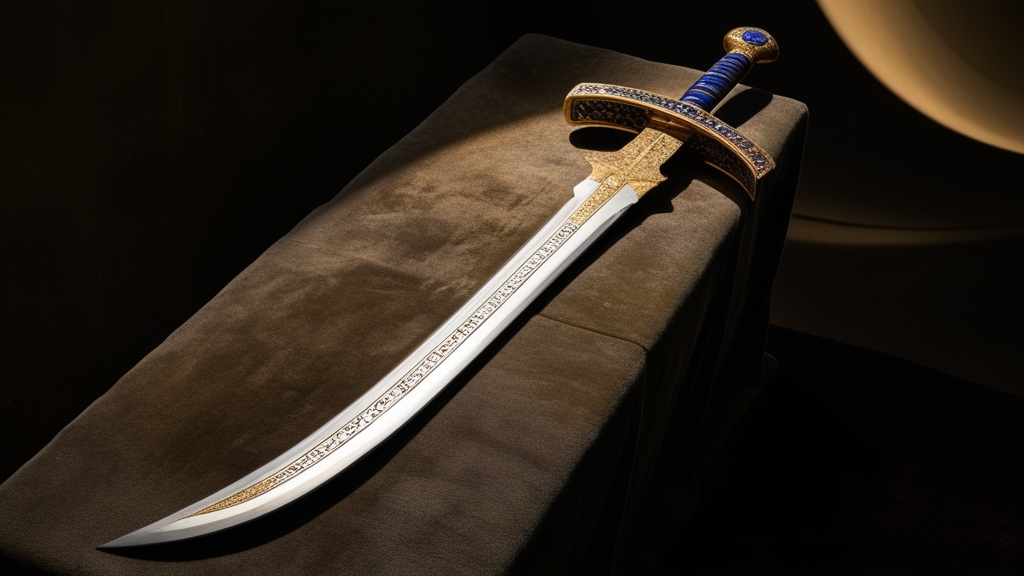
Have you ever held a blade so curved it felt like the weapon was already mid-swing before you moved? That's the shamshir. Pick one up and your wrist instinctively wants to pull rather than push — and that instinct is the whole point. Persian swordsmanship style isn't just a collection of strikes built around an exotic-looking weapon. It's a coherent combat philosophy shaped by cavalry warfare, imperial ambition, trade-route cross-pollination, and a poetic culture that took its warriors seriously enough to write epics about them. This guide covers the body mechanics, the historical arc, and the cultural weight behind one of the world's most sophisticated — and most underexplored — sword-fighting traditions.
- When Steel Curved Like a Crescent Moon: A First Look at Persian Swordsmanship Style
- Roots in the Dust: The Historical Origins of Persian Swordsmanship
- The Weapon That Defined the Style: Anatomy of the Shamshir and Its Kin
- How It Actually Fights: Core Techniques of the Persian Swordsmanship Style
- Persian Martial Arts in Context: Varzesh-e Bastani and the Broader Fighting System
- On the Battlefield and in the Divan: Persian Swordsmanship in War and Literature
- The Style Today: Modern Persian Swordsmanship and Its Revival
- Carrying the Crescent Forward: Why Persian Swordsmanship Still Matters
- FAQ
When Steel Curved Like a Crescent Moon: A First Look at Persian Swordsmanship Style
Imagine a Safavid ghulam cavalryman at full gallop, leaning into a downward arc that doesn't chop — it slices the length of a man's shoulder in a single fluid pull. The motion is almost calligraphic. Speed and geometry do the work; brute force is secondary. That image captures something essential about Persian sword fighting that most Western accounts miss entirely.
Why Persian Swordsmanship Deserves More Than a Footnote
Most coverage of Persian swords stops at "it's curved and pretty." That's like describing judo as "you throw people." The Persian martial tradition spans more than two millennia, absorbed and exported techniques across three continents, and produced blade-craft refined enough that its steel — wootz, the legendary Damascus-pattern material — was sought from Toledo to Kyoto. The fighting system that grew around these blades deserves the same analytical attention we give Japanese kenjutsu or European longsword traditions.
The honest caveat: the documentary record for Persian swordsmanship is thinner than for some other traditions. Manuals comparable to the German Fechtbücher or the Japanese densho are scarce in Persian sources. What we have are military histories, poetic epics, artistic depictions, and living institutional memory preserved in the zurkhaneh (house of strength). That's enough to reconstruct the system's outlines — but intellectual honesty demands we say where reconstruction ends and documented fact begins.
What Makes This Fighting Tradition Distinct
Three things set Persian sword fighting apart from its neighbors:
- Geometry-first design — The shamshir's extreme curve means the fighting system is built around drawing cuts, not thrusts or flat-angle chops.
- Cavalry integration — Persian swordsmanship evolved in tandem with horse culture for centuries, producing techniques optimized for mounted combat at speed.
- Cultural embedding — The sword wasn't just a tool. It appeared in Sufi poetry, royal ceremony, and athletic ritual in ways that kept the combative tradition alive long after gunpowder changed the battlefield.
Roots in the Dust: The Historical Origins of Persian Swordsmanship
Persian sword culture didn't appear fully formed. It accumulated across dynasties, each one adding a layer the next generation either refined or discarded.
From the Achaemenid Empire to the Safavid Golden Age
The Achaemenid Empire (550–330 BCE) fielded cavalry and infantry armed with the akinakes, a short straight sword suited to close-quarters fighting from horseback. Achaemenid military doctrine relied heavily on combined arms — cavalry, archers, and infantry working in concert — and the sword was a secondary weapon to the bow and spear. By the time of the Sassanid Empire (224–651 CE), Persian cavalry had evolved into heavily armored savaran knights whose sword use was integrated with lance charges and mounted archery.
The Islamic period brought both disruption and synthesis. Arab conquest introduced new tactical contexts and the Mongol invasions of the 13th century — catastrophic as they were culturally — accelerated the spread of the curved blade across the region. The shamshir's design was shaped by the scimitar tradition that moved across the Middle East and South Asia during this period. It was under the Safavid dynasty (1501–1736) that Persian swordsmanship reached what we might call its classical form — systematized, aesthetically refined, and documented in court records and artistic commissions.
How Trade Routes and Conquest Shaped Persian Sword Culture
Persia sat at the crossroads of Eurasia. The Silk Road wasn't just a conduit for silk — it moved metallurgical knowledge, blade designs, and fighting men. Turkish, Mongol, Arab, and Indian influences all left marks on Persian sword culture. The result wasn't dilution but synthesis: Persian smiths and warriors absorbed external inputs and produced something distinctly their own.
The kilij (a Turkish blade with a pronounced yelman, or false edge near the tip) and the Indian talwar are cousins of the shamshir, sharing a family tree rooted in this cross-cultural exchange. Grasping the differences between them is essential to understanding why Persian swordsmanship developed the specific technical vocabulary it did.
Named Practitioners and Schools: What the Historical Record Actually Shows
Here's where honesty matters. Unlike Japanese kenjutsu, which has documented lineages stretching back to named founders, Persian swordsmanship doesn't give us a clean list of schools and masters. What we do have:
- The Adab al-Harb wa al-Shuja'a ("Manners of War and Bravery"), a 13th-century Persian military manual by Fakhr-i Mudabbir, which discusses weapons and martial training in a courtly context.
- Safavid-era miniature paintings that depict specific guard positions and cutting angles with enough consistency to suggest codified technique.
- The zurkhaneh tradition, which preserves ritualized athletic practice tied to warrior culture.
No fabricated lineages here. The record is partial — but partial doesn't mean empty.
The Weapon That Defined the Style: Anatomy of the Shamshir and Its Kin
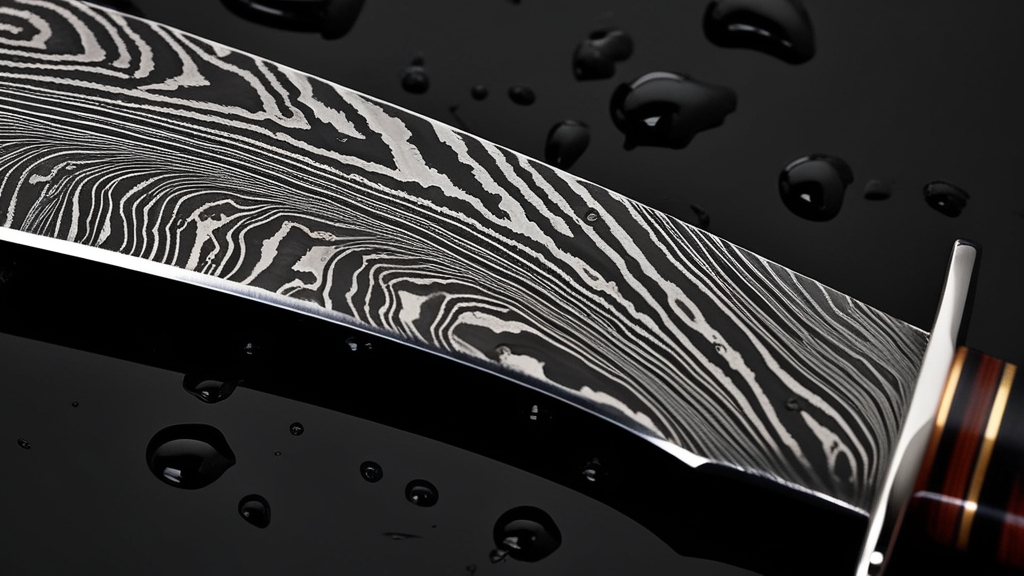
You can't separate the Persian swordsmanship style from the blade that shaped it. The shamshir isn't just a curved sword — it's a specific engineering solution to specific combat problems.
Blade Geometry and Why the Curve Changes Everything
The shamshir's blade curves dramatically from hilt to tip — sources describe arcs that make the tip point nearly back toward the user when the sword is held naturally. This geometry has direct biomechanical consequences:
- Draw cuts dominate. A deeply curved blade doesn't cleave through a target; it slices along it. The cutting action is a pull rather than a push, drawing the edge across tissue for maximum cutting surface contact.
- Thrusting is compromised. The tip angle makes a committed thrust geometrically awkward. Persian swordsmanship is overwhelmingly a cutting art.
- Wrist mechanics shift. Where a straight sword lets you cut with a locked wrist, the shamshir rewards a supple wrist that guides the blade through its arc.
Compare this to a Japanese katana, which has a moderate curve optimized for both draw cuts and thrusts, or a European saber, which typically has enough straight spine to allow point-forward fencing. The shamshir sits at the extreme end of the curve spectrum — and the fighting system reflects that.
The Shamshir, Kilij, and Talwar: Understanding the Family Tree
| Blade | Origin | Key Feature | Combat Emphasis |
|---|---|---|---|
| Shamshir | Persia/Iran | Deep continuous curve, no yelman | Draw cuts, cavalry slashing |
| Kilij | Ottoman Turkey | Pronounced yelman (false edge) near tip | Cuts plus tip-weighted chopping |
| Talwar | Indian subcontinent | Disk pommel, moderate curve | Versatile cutting, close-quarters |
| Pulwar | Afghanistan/Central Asia | Flared crossguard, medium curve | Infantry and cavalry use |
These blades share ancestry but diverged as each culture adapted the form to local warfare, terrain, and fighting philosophy.
Materials, Forging, and the Legend of Persian Wootz Steel
Wootz steel — the material behind the legendary Damascus-pattern blades — is one of history's most studied metallurgical achievements. Persian and Indian smiths produced it through a crucible process that created high-carbon steel with distinctive banding patterns visible on the finished surface. The resulting blade held an edge exceptionally well and showed a flexibility that genuinely surprised European observers who encountered it on campaign.
The science behind wootz is documented and real; the mythology around it (blades that cut through rifle barrels, etc.) is not. For a grounded account of the metallurgy, the Wikipedia article on wootz steel is a reasonable starting point, though primary metallurgical research goes considerably deeper.
How It Actually Fights: Core Techniques of the Persian Swordsmanship Style
This is the section most sources skip. Let's not.
The Draw Cut (Qame Zadan): Hip Rotation, Wrist Mechanics, and Footwork
The foundational offensive technique in Persian sword fighting is the draw cut — in Persian martial vocabulary sometimes referenced as qame zadan (cutting stroke). Here's what it actually involves:
The mechanics, step by step:
- Hip initiation. The cut doesn't start in the arm. The rear hip drives forward, rotating the torso and loading the shoulder before the arm extends. This is identical in principle to the hip drive in a Muay Thai roundhouse — power generated from the center, expressed at the periphery.
- Arm extension with a soft elbow. The elbow stays slightly bent through the stroke. A locked elbow transfers shock back into the shoulder and kills the follow-through.
- Wrist supination at contact. As the blade makes contact, the wrist rotates outward (supinates), drawing the curved edge along the target rather than into it. This is the "pull" that makes the cut work.
- Foot placement. Dismounted, the lead foot angles roughly 45 degrees to the target line. This opens the hip for rotation while keeping the body's centerline protected.
The geometry of the shamshir makes this cut devastatingly efficient against unarmored or lightly armored opponents. Against plate armor — which Persian warriors rarely faced in the same way European knights did — it's less useful, which partly explains why Persian swordsmanship evolved in a context where armor was often mail or lamellar rather than full plate.
Mounted vs. Dismounted Combat: Two Distinct Technical Vocabularies
Persian swordsmanship is really two systems sharing a weapon:
Mounted (cavalry) techniques:
- Sweeping downward arcs from horseback, using the horse's momentum to amplify the cut's force
- No pommel strikes — the grip is too important for control at speed
- Target selection favors the head, neck, and sword arm of opponents
- Shield use is minimal; the horse's speed is the defense
Dismounted (infantry/duel) techniques:
- Lower center of gravity; guards are more compact
- The sipar (small buckler shield) enters the picture, used for deflection rather than blocking
- Footwork becomes critical — circular stepping to avoid the opponent's cutting line
- Closer-range techniques, including the use of the crossguard for controlling an opponent's blade
The Safavid ghulam cavalry represented the apex of mounted Persian swordsmanship — elite soldiers trained from youth in horsemanship and blade work as an integrated system.
Guards, Parries, and the Role of the Shield in Classical Persian Dueling
The sipar — a small round shield, often of metal or hardened leather — was the standard off-hand tool in Persian dueling contexts. Its use wasn't passive blocking but active deflection: angling the incoming blade away from the body's centerline while simultaneously creating an opening for the sword hand to cut. Think of it as a conversation between the two hands rather than a wall the left hand holds up.
Guard positions in Persian swordsmanship, as reconstructed from artistic sources, tend to favor the sword hand held high and back — a chambered position that loads the draw cut — with the sipar extended forward to manage distance. This is mechanically different from, say, a European half-sword guard, which involves both hands on the blade.
Persian Martial Arts in Context: Varzesh-e Bastani and the Broader Fighting System
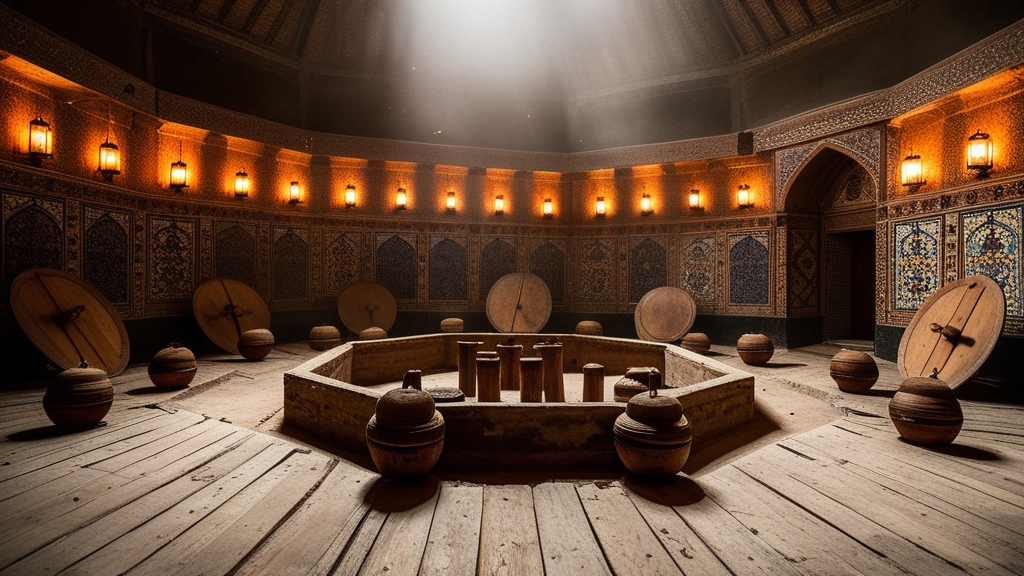
Swordsmanship didn't exist in isolation. It was part of a larger martial ecosystem that Iranians called Varzesh-e Bastani — literally "ancient sport" or "ancient athletics."
What Is Varzesh-e Bastani and How Does Swordsmanship Fit In?
Varzesh-e Bastani is the traditional athletic and martial system of Iran, encompassing strength training, wrestling, archery, and weapons work within a ritualized framework. It's not a single codified art in the way judo is — it's more like a cultural container that held multiple fighting disciplines together under a shared ethical and aesthetic code rooted in javanmardi (roughly: chivalry, or "young-manly" virtue).
Swordsmanship fit into this system as its most prestigious component. The blade was the warrior's marker of status and skill. But it was always understood as part of a complete fighter's education, not a standalone specialty.
Wrestling, Archery, and the Integrated Warrior Tradition
The ideal Persian warrior in classical sources was:
- A skilled archer (tir-andaz)
- A capable wrestler (koshti practitioner)
- A competent horseman
- A swordsman
These weren't separate hobbies. They formed an integrated curriculum. Koshti (Persian wrestling) developed the body awareness and grappling instincts that informed close-quarters sword work. Archery trained the eye and the breath control that steady sword technique demands. Horsemanship and blade work were trained together because cavalry combat required both simultaneously. Nobody worried about which gym to join on which day — the whole thing was one system.
The Zurkhaneh: A Living Institution That Preserved Combat Culture
The zurkhaneh is one of the most remarkable martial institutions in the world — and one of the least known outside Iran. Translated as "house of strength," it's a ritual gymnasium where athletes train with traditional implements (the mil club, the sang shield-weight, the kabbadeh bow) to the accompaniment of a drummer and a reciter chanting verses from the Shahnameh.
The zurkhaneh survived the decline of battlefield sword use, survived the Mongol invasions, survived modernization, and continues operating in Iran and in diaspora communities worldwide. It preserved not just physical conditioning methods but the cultural memory and ethical framework — javanmardi — that gave Persian martial arts their meaning. For anyone interested in Persian martial arts today, the zurkhaneh is the most direct living connection to the tradition.
You can learn more about the zurkhaneh's UNESCO recognition and global presence through the Wikipedia article on Varzesh-e Bastani.
On the Battlefield and in the Divan: Persian Swordsmanship in War and Literature
The Persian warrior tradition was documented not just in military manuals but in some of the greatest poetry ever written — and those poems weren't merely decorative. They encoded tactical ideals.
Tactical Roles in Safavid and Earlier Persian Armies
The Safavid army at its height was a sophisticated combined-arms force. The ghulam cavalry — slave-soldiers of Georgian, Armenian, and Circassian origin, trained from youth in the Persian martial tradition — formed its elite sword-bearing core. These riders integrated swordsmanship with lance work and mounted archery in a tactical system that made Safavid Persia a regional superpower from the early 16th through the early 18th century.
Sword-armed cavalry operated in Safavid doctrine as the decisive shock element after archers had disrupted enemy formations. The ghulam would exploit gaps opened by arrow volleys, using the shamshir's draw-cut capability at the canter — a technique that required years of integrated horse-and-blade training to execute reliably under combat stress.
The Shahnameh's Warriors: How Epic Poetry Encoded Fighting Knowledge
Ferdowsi's Shahnameh ("Book of Kings," completed around 1010 CE) is the foundational epic of Persian civilization — and it's packed with combat. Heroes like Rostam and Sohrab aren't just mythological figures; their described fighting methods reflect the martial values and tactical thinking of the culture that produced them.
The Shahnameh doesn't provide a technical manual but it does something equally important: it establishes the ethical framework within which Persian swordsmanship was meant to operate. Courage, fairness in single combat, restraint toward the defeated — these are javanmardi values encoded in narrative form. Warriors who trained in the zurkhaneh heard these verses recited during their workouts. The poetry wasn't separate from the training; it was part of it.
Symbolism, Ceremony, and the Sword as Cultural Object
In Persian court culture, the sword carried meanings beyond combat. Royal investiture ceremonies involved the presentation of a sword. Sufi orders used the blade as a symbol of spiritual discrimination — the capacity to cut through illusion. Persian miniature painting depicted swords with extraordinary care, often capturing specific blade geometries and hilt designs that help modern researchers reconstruct what actual weapons looked like.
This ceremonial dimension kept swordsmanship culturally central even as firearms increasingly dominated Persian battlefields from the 16th century onward. The shamshir became simultaneously more symbolic and more refined as a craft object — which is why the finest surviving examples are works of art as much as weapons.
The Style Today: Modern Persian Swordsmanship and Its Revival
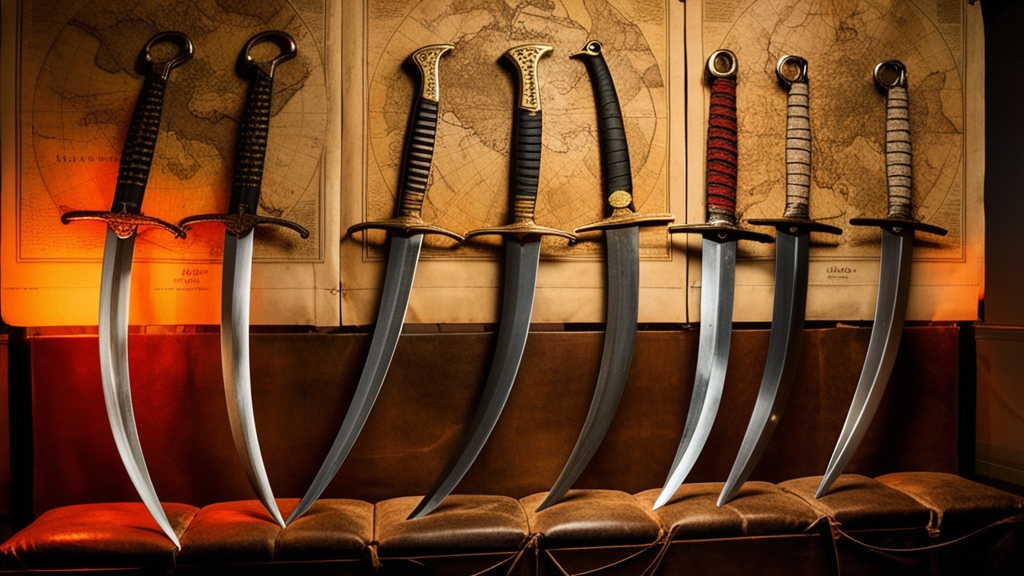
What actually survives of Persian swordsmanship as a living practice? The honest answer is: fragments, reconstructions, and one remarkable continuous institution.
What Survives: Documented Lineages and Contemporary Practitioners
The zurkhaneh tradition is the most clearly continuous thread. Its athletic practices — the swinging clubs, the shield-weights, the ritualized movement — preserve body-conditioning methods directly tied to the warrior tradition, even if the sword-specific curriculum has thinned considerably.
Beyond the zurkhaneh, Persian swordsmanship as a codified fighting system exists primarily in reconstruction. Iranian martial arts federations have worked to systematize and revive elements of the tradition, though the line between authentic transmission and modern synthesis isn't always clearly drawn. Diaspora communities in Europe and North America have brought zurkhaneh practice with them, creating nodes of living tradition outside Iran.
Within the HEMA (Historical European Martial Arts) community — which has expanded well beyond Europe to cover global historical sword traditions — there are active research groups working on Persian and broader Islamic swordsmanship using period manuscripts, artistic sources, and comparative analysis with related traditions.
How to Begin Studying Persian Swordsmanship Style in the Modern Era
If you want to engage seriously with Persian sword fighting today, here's a realistic starting path:
- Find a zurkhaneh. Even if sword work isn't on the curriculum, the body conditioning and cultural grounding are irreplaceable. Search for zurkhaneh clubs in major cities with Iranian diaspora communities.
- Study the Shahnameh. Dick Davis's translation (Penguin Classics) is accessible and excellent. Read it as a martial document, not just a literary one.
- Engage with HEMA research on Islamic swordsmanship. The HEMA Alliance and Wiktenauer project have growing resources on non-European traditions.
- Handle a shamshir replica. Understanding the blade's geometry intellectually is one thing; feeling how it wants to move in your hand is another. Quality reproductions are available from reputable smiths.
- Read the Adab al-Harb. Fakhr-i Mudabbir's 13th-century manual is partially translated in academic sources and gives the closest thing we have to a period Persian martial text.
Digital Resources, PDFs, and Where to Find Credible Instruction
Searches for "Persian swordsmanship style PDF" typically surface a mix of academic papers, HEMA forum discussions, and unfortunately some low-quality aggregated content. The most reliable academic material comes through JSTOR, university library databases, and the journal Acta Orientalia. For practical instruction, video content from established HEMA instructors who specialize in Islamic sword traditions is more reliable than most standalone PDFs.
Be skeptical of any source claiming an unbroken lineage of Persian sword masters passing secret techniques through the centuries. The historical record doesn't support that narrative — and the tradition is interesting enough without the mythology.
Carrying the Crescent Forward: Why Persian Swordsmanship Still Matters
Persian swordsmanship style is not a museum piece. It's a technical system with genuine biomechanical logic, a historical tradition with documented roots across multiple empires, and a cultural practice kept alive by institutions — the zurkhaneh chief among them — that refused to let it disappear. The shamshir's curve encodes a fighting philosophy: efficiency over power, geometry over brute force, the pull that does more work than the push.
The gaps in the record are real. We don't have the Persian equivalent of Fiore dei Liberi's Flos Duellatorum or Miyamoto Musashi's Go Rin No Sho. What we have is fragmentary and intellectual honesty requires saying so. But fragmentary doesn't mean unrecoverable. The zurkhaneh still drums. The Shahnameh still gets recited. HEMA researchers are doing serious archival work. And anyone who picks up a shamshir and feels that pull immediately understands something no text could fully explain.
Your next step: find a zurkhaneh near you, read the Shahnameh with a warrior's eye, or connect with the HEMA community's growing work on Islamic sword traditions. The crescent blade has more to teach than most people have thought to ask.
FAQ
What was the fighting style in ancient Persia?
Ancient Persian fighting combined archery, spear work, and sword use in a combined-arms military doctrine. The Achaemenid-era sword was the short, straight akinakes, used as a secondary weapon by cavalry. Over successive dynasties — Sassanid, then Islamic-period, then Safavid — the tradition shifted toward curved blades and cavalry-integrated draw-cut techniques that define classical Persian swordsmanship.
What kind of swords did Persians use?
Persian warriors used several blade types across history. The akinakes was a short straight sword of the Achaemenid period. By the Safavid era (16th–18th century), the shamshir — a deeply curved single-edge sword optimized for draw cuts — had become the defining Persian blade. Related weapons in the broader family include the kilij (Ottoman), talwar (Indian), and pulwar (Afghan/Central Asian).
What is Persian martial arts?
Persian martial arts falls under the umbrella of Varzesh-e Bastani ("ancient athletics"), a traditional system encompassing swordsmanship, wrestling (koshti), archery, and strength training. These disciplines were practiced within the zurkhaneh (house of strength), a ritualized gymnasium where training was accompanied by Shahnameh recitation and drumming. The ethical framework binding all these arts is called javanmardi — a code of warrior chivalry.
What was the military style of Persia?
Classical Persian military doctrine was cavalry-heavy and combined-arms. Safavid armies relied on elite ghulam cavalry — trained from youth in horsemanship, archery, and swordsmanship — to deliver decisive shock after archers disrupted enemy formations. Sword-armed riders used the shamshir's draw-cut capability at the canter, exploiting gaps in enemy lines with speed and geometric efficiency rather than brute force.
How does the shamshir's curved blade affect fighting technique compared to a straight sword?
The shamshir's deep curve shifts the entire combat system toward draw cuts — pulling the edge along the target rather than chopping into it. This makes thrusting geometrically awkward and rewards a supple, rotating wrist over a locked arm. Compared to a straight sword or even a moderately curved katana, the shamshir demands hip-initiated power generation and a pulling follow-through that maximizes cutting surface contact.
Is there a modern revival of Persian swordsmanship?
Yes, in fragmented but genuine form. The zurkhaneh tradition continues in Iran and diaspora communities worldwide, preserving body conditioning and cultural context. HEMA researchers are actively reconstructing Persian and Islamic sword techniques from period manuscripts and artistic sources. Iranian martial arts federations have also worked to systematize elements of the tradition, though the line between authentic transmission and modern reconstruction varies by group.