
Martial Arts Styles Names: A Complete Guide to Fighting Systems

The first time I walked into a Muay Thai gym in Chiang Mai, the name above the door was written in Thai script I couldn't read. My instructor, Kru Daeng, told me it translated roughly to "the art of the eight limbs" — and in that one phrase, I understood more about what I was about to learn than any brochure had told me. The name wasn't decoration. It was a map.
Martial arts styles names work exactly like that. Every one of them encodes history, geography, philosophy, and technique. There are hundreds of distinct fighting systems practiced across the world — some ancient, some barely a century old — and knowing what their names actually mean helps you understand what you're walking into before you ever tie on a belt or wrap your hands.
This guide covers the major martial arts styles, organized by what they train, where they come from, and what their names tell you about their purpose.
- In This Guide
- Why Martial Arts Style Names Matter — And What They Tell You
- Striking-Based Martial Arts: Fists, Feet, and Distance
- Grappling and Throwing Systems: Ground Control and Takedowns
- Hybrid and Mixed Systems: Blending Disciplines
- Weapon-Based and Traditional Systems: The Older Lineages
- Internal and Philosophical Systems: Chi, Flow, and Longevity
- Regional Variations and Local Names: The Same Art, Different Places
- How to Choose a Martial Art Style — Matching Name to Your Goals
- Conclusion: The Story Behind Every Martial Arts Style Name
- FAQ
In This Guide
- Why Martial Arts Style Names Matter
- Striking-Based Martial Arts: Fists, Feet, and Distance
- Grappling and Throwing Systems: Ground Control and Takedowns
- Hybrid and Mixed Systems: Blending Disciplines
- Weapon-Based and Traditional Systems: The Older Lineages
- Internal and Philosophical Systems: Chi, Flow, and Longevity
- Regional Variations and Local Names: The Same Art, Different Places
- How to Choose a Martial Art Style
- Conclusion
Why Martial Arts Style Names Matter — And What They Tell You
Before you dive in: martial arts basics start with the name, not the technique.
Most people treat a martial art's name as a label — a brand, almost. Muay Thai sounds cool. Brazilian Jiujitsu sounds technical. Capoeira sounds exotic. But every one of those names carries meaning that shapes what you'll actually do in class.
How Naming Reflects Origin, Philosophy, and Technique
Muay Thai literally means "Thai boxing" — muay is the Thai word for boxing, and Thai names the nation. That tells you it's a striking system tied to a specific cultural and geographic origin. Taekwondo breaks down in Korean as tae (kick), kwon (fist), and do (way or path) — three words that outline the style's priorities before you've thrown a single technique. Judo comes from Japanese: ju means gentle or yielding, do means way. The name tells you the philosophy: use your opponent's force, don't fight it head-on.
This isn't coincidence. Martial arts traditions developed within specific cultures, and their founders named them to communicate intent. A name like Kali (Filipino stick and blade fighting) is rooted in the Visayan region of the Philippines. Some scholars link it to the word kalis, a type of blade. The name points you to the weapon before you ever pick one up.
What the Name Actually Promises (and Doesn't)
Here's where it gets complicated. Names can mislead you. "Kung Fu" in Mandarin (gōngfu) doesn't mean fighting at all — it means skill developed through hard work. You can have gongfu in cooking or calligraphy. The martial application came later, and Western audiences attached the name to Chinese fighting styles broadly. That's why "Kung Fu" covers dozens of distinct systems, from Wing Chun to Hung Gar to Praying Mantis, each with its own mechanics and lineage.
The name is a starting point, not a complete answer. Think of it like a chapter title — it tells you the subject, not the whole story.
Striking-Based Martial Arts: Fists, Feet, and Distance
Striking systems are the most immediately recognizable martial arts styles. You punch, kick, elbow, or knee. Distance management is the core skill — knowing when you're close enough to land and far enough to avoid getting hit.
Muay Thai — The Art of Eight Limbs
Muay Thai is Thailand's national sport and one of the most complete striking systems ever developed. Where Western boxing uses two weapons (the fists), Muay Thai uses eight: fists, elbows, knees, and shins. The shin kick — a low, sweeping leg kick delivered with the lower third of the shin bone — hits like a baseball bat. I've seen 140-pound fighters drop bigger opponents with a single well-placed low kick to the thigh.
The style developed over centuries in Thailand, refined through warfare and then sport competition at venues like Lumpinee Stadium in Bangkok. Fighters like Saenchai and Buakaw Banchamek brought it to global attention. Training emphasizes pad work, clinch work (the plum position — head control with both hands behind the neck), and the kind of conditioning that takes months to build.
Kickboxing — Western Boxing Meets Leg Kicks
Kickboxing isn't one style — it's a family of combat sports that blend punching from Western boxing with kicking techniques drawn from various traditions. Japanese kickboxing developed in the 1960s when Osamu Noguchi wanted to create a sport that combined karate strikes with boxing rules. American kickboxing (sometimes called "full-contact karate") emerged separately and initially banned leg kicks, focusing on punches and kicks above the waist.
The name is functional rather than philosophical — it describes what you do. Kick. Box. No hidden meaning here.
Karate — Forms, Kata, and Point-Fighting Traditions
Karate means "empty hand" in Japanese (kara = empty, te = hand). It originated in Okinawa as a synthesis of indigenous Okinawan fighting methods (te) and Chinese martial arts brought by traders and diplomats. Gichin Funakoshi is widely credited with bringing Karate to mainland Japan in 1922, and the style he taught — Shotokan — remains the most widely practiced variant globally.
Karate's stances are upright and relatively narrow compared to Chinese systems. Punches are delivered from the hip with a sharp rotation. Kata (pre-arranged forms) are the backbone of traditional training — sequences of movements against imaginary opponents that encode technique and timing. Sport Karate (as seen at the Tokyo 2020 Olympics) uses point-fighting rules where light, controlled contact scores.
Taekwondo — Olympic Kicks and Belt Rank Systems
Taekwondo is a Korean striking art that made kicks its signature. The fighting stance is narrower and more sideways-on than Karate, partly to protect the body and partly because it loads the rear leg for fast spinning and jumping kicks. The iconic back kick, spinning heel kick, and axe kick are all Taekwondo staples.
The belt rank system in Taekwondo is among the most structured in any martial art — ten color belts lead to the black belt, and black belt itself has nine dan (degree) levels. Taekwondo became an Olympic sport in 2000 at the Sydney Games. The World Taekwondo Federation (now World Taekwondo) governs the sport format.
Grappling and Throwing Systems: Ground Control and Takedowns
Grappling arts don't rely on impact. They rely on leverage, position, and the patient accumulation of mechanical advantage — like tightening a vise one turn at a time until something has to give.
Jujutsu — Japanese Joint Locks and Throws from Standing
Jujutsu (also spelled jujitsu or ju-jitsu) is the parent system from which both Judo and Brazilian Jiujitsu descend. It developed in feudal Japan as a battlefield art for samurai who'd lost their weapons. The name follows the same ju (yielding) principle as Judo — use the opponent's momentum, redirect it, and apply a lock or throw.
Traditional Jujutsu schools (ryū) vary enormously. Some emphasize throwing (nage-waza), others focus on joint locks (kansetsu-waza) or chokes. The Takenouchi-ryū, founded in 1532, is often cited as one of the oldest surviving Jujutsu schools.
Brazilian Jiujitsu — The Submission-Focused Evolution
Brazilian Jiujitsu (BJJ) traces its lineage through Mitsuyo Maeda, a Japanese Judo and Jujutsu expert who emigrated to Brazil in the early 20th century and taught the Gracie family. The Gracies — particularly Hélio Gracie — adapted the techniques for a smaller person fighting a larger one, emphasizing ground fighting and submission holds over throws.
Where Judo rewards a clean throw with an ippon (instant win), BJJ rewards positional control on the ground. Mount, back control, guard — these are the currencies of BJJ. A submission via armbar or rear-naked choke is the goal. Royce Gracie's dominance at the first UFC events in 1993 introduced BJJ to a global audience and changed how fighters trained forever.
Wrestling — Folkstyle, Greco-Roman, and Freestyle Variants
Wrestling is probably the oldest codified combat sport on earth — it appears in ancient Egyptian tomb paintings from around 2000 BCE and in the ancient Greek Olympics. The name is plain English, and the concept is just as direct: take your opponent to the ground and control them.
Three main competitive forms exist today. Freestyle wrestling allows leg attacks and is practiced worldwide. Greco-Roman bans holds below the waist, forcing upper-body throws. Folkstyle (collegiate wrestling in the United States) emphasizes control and riding time on the mat. All three share the same core skill: the takedown.
Judo — Throws as an Olympic Sport
Judo was created in 1882 by Jigorō Kanō, who systematized the most effective Jujutsu techniques into a coherent sport and educational system. The scoring is elegant: a clean throw that lands the opponent on their back scores ippon and ends the match immediately. Partial throws score waza-ari. Two waza-ari equal an ippon.
Judo became an Olympic sport for men in 1964 (Tokyo) and women in 1992 (Barcelona). It's now practiced in over 200 countries. The randori (free practice) method Kanō introduced — live sparring against a resisting partner — was revolutionary and directly influenced how BJJ, Sambo, and MMA practitioners train today.
Hybrid and Mixed Systems: Blending Disciplines
Some martial arts styles names describe systems that were built by combining existing traditions rather than growing from a single root. These hybrids are often the most practically effective — and the hardest to categorize.
Mixed Martial Arts (MMA) — The Modern Synthesis
MMA isn't a style in the traditional sense. It's a framework — a set of rules (no eye gouges, no groin strikes, no strikes to the back of the head) within which fighters can use any effective technique from any discipline. A competitive MMA fighter typically trains striking (Muay Thai or boxing), wrestling (for takedown offense and defense), and submission grappling (BJJ or Sambo).
The UFC, founded in 1993, popularized MMA globally. But the concept of mixed-system competition is older — the Brazilian vale tudo ("anything goes") events of the mid-20th century predate the UFC by decades.
Kung Fu — Dozens of Styles Under One Umbrella
As mentioned earlier, "Kung Fu" is a category, not a single martial art. Under that umbrella sit hundreds of distinct Chinese fighting systems. Wing Chun emphasizes close-range punching and simultaneous block-and-strike. Hung Gar is known for its low stances and iron-bridge forearm conditioning. Praying Mantis mimics the insect's hooking arm motion. Northern Shaolin styles tend toward long, extended kicks; southern styles favor short, powerful hand techniques.
Lumping them all under "Kung Fu" is like calling every European sword-fighting tradition "fencing." Technically related. Practically very different.
Sanda (Chinese Kickboxing) — Traditional Meets Sport
Sanda (also called Sanshou) is China's competitive combat sport, developed in the 20th century to test traditional Kung Fu practitioners against practitioners of other systems. It combines punches, kicks, and shuai jiao (Chinese wrestling throws) under sport rules. A Sanda fighter can knock an opponent down with a punch or dump them off a raised platform with a hip throw.
It's a genuinely underrated striking art. I've trained with Sanda fighters who had throws that would make a Judoka envious, combined with boxing combinations that felt straight out of a Muay Thai gym.
Sambo — Soviet Wrestling Meets Throws and Submissions
Sambo stands for Samozashchita Bez Oruzhiya — "self-defense without weapons" in Russian. It was developed in the Soviet Union in the 1920s and 1930s by Vasili Oshchepkov and Viktor Spiridonov, who synthesized Judo, folk wrestling styles from across the Soviet republics, and various submission techniques.
Sport Sambo resembles Judo with leg locks allowed. Combat Sambo adds strikes and is the system that produced Fedor Emelianenko and Khabib Nurmagomedov — two of the most dominant fighters in MMA history.
Weapon-Based and Traditional Systems: The Older Lineages
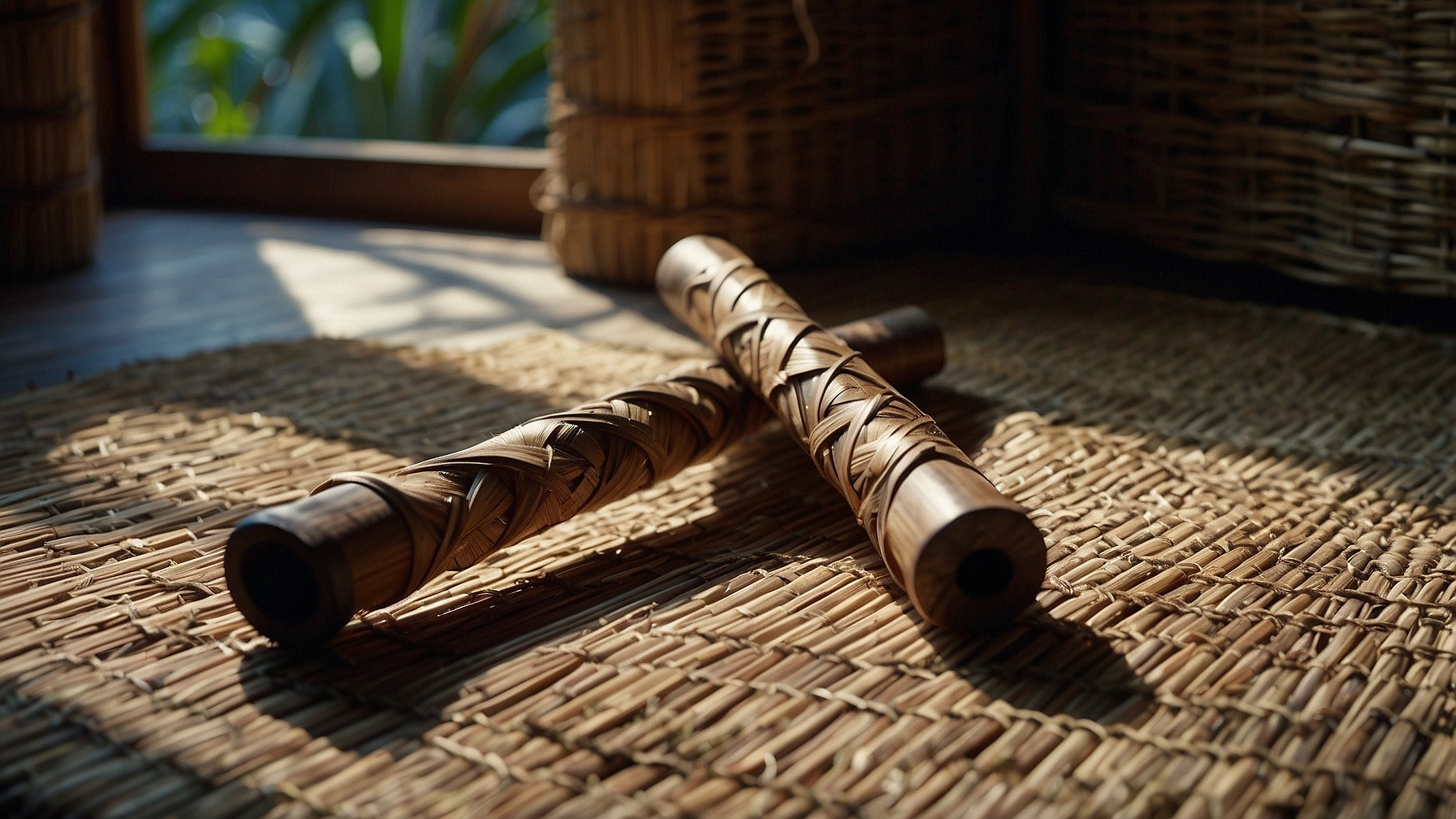
Weapon-based martial arts styles represent some of the oldest fighting traditions on earth. What's easy to miss is how deeply weapon training shaped the empty-hand techniques that came later — the footwork, the angles, the timing.
Kali/Eskrima — Filipino Stick and Blade Fighting
Kali (also called Eskrima or Arnis) is the national martial art and sport of the Philippines, recognized officially in 2009. It's taught weapon-first — rattan sticks before empty hands — because the founders understood that the mechanics of stick fighting translate directly to open-hand combat. The same angle-2 strike that hits with a stick becomes a hammer-fist or an elbow when you're empty-handed.
Kali practitioners move in triangular footwork patterns, constantly angling off the centerline. Pick up a pair of rattan sticks and you feel it immediately — the flow of figure-eight patterns, the wrist rolling, the way distance collapses fast. Dan Inosanto, a student of Bruce Lee, is largely responsible for bringing Kali to Western martial arts audiences.
Silat — Southeast Asian Grappling and Strikes
Pencak Silat is the collective name for hundreds of fighting styles from Indonesia, Malaysia, Brunei, and the southern Philippines. The name pencak refers to the performance and sport aspect; silat refers to the combat application. It's a complete system — strikes, kicks, throws, locks, and weapons (particularly the keris dagger and parang machete).
Silat footwork is low and wide, designed for uneven terrain. Practitioners drop to one knee to sweep, or sink their weight to redirect a grab. It looks almost like a dance from the outside. Up close, the joint manipulation is ruthless.
Wushu — Chinese Traditional Forms and Combat Applications
Wushu (wǔshù) simply means "martial art" in Mandarin — wu (martial/military) and shu (art/skill). It's both the umbrella term for all Chinese martial arts and the name of the modern sport form developed in China after 1949, which emphasizes acrobatic forms (taolu) for competition.
Sport Wushu is visually spectacular — aerial spinning kicks, ground sweeps, weapons forms with swords and staffs that blur at competition speed. The combat application (sanda) runs alongside it as a separate competitive track.
Capoeira — Brazilian Dance-Fighting with African Roots
Capoeira was developed by enslaved Africans in Brazil, likely beginning in the 16th or 17th century. The name's exact etymology is debated — one theory links it to the Tupi words for "low forest" (caa and puera), describing the terrain where practitioners trained and hid. Another traces it to an African-language term for a type of basket.
The disguise was intentional. Capoeira was practiced as a dance to hide its martial nature from slaveholders. The ginga — a constant swaying movement — looks like a dance step. It's actually a way to stay in constant motion, make yourself a harder target, and load your legs for kicks. The au (cartwheel) isn't acrobatics for show. It's evasion and a platform for a kick on the way back up.
Internal and Philosophical Systems: Chi, Flow, and Longevity
Internal martial arts styles names often get dismissed as mysticism. That's a mistake. "Internal" refers to a specific training methodology — whole-body coordination, breath integration, and the use of structural alignment rather than muscular force. The mechanics are real. The language around them is sometimes not.
Tai Chi — Slow Forms and Internal Energy Cultivation
Tai Chi Chuan (Tàijí Quán) translates as "Supreme Ultimate Fist" — taiji refers to the yin-yang cosmological concept, and quan means fist or boxing. The slow, flowing forms that most people recognize are a training method, not the end product. You practice slowly to develop precise body mechanics: weight shifting, hip rotation, continuous connection from foot to fingertip.
Chen-style Tai Chi, the oldest lineage, includes explosive bursts of power (fajin) alongside the slow sections — it looks nothing like the park exercise version most people know. The Yang style, developed by Yang Luchan in the 19th century, is the slow, large-frame version that spread globally.
Qigong — Breathing, Posture, and Health Focus
Qigong (qìgōng) means "life energy cultivation" — qi (breath/energy) and gong (skill/work). It's not strictly a martial art, but it underpins many Chinese fighting systems. The standing postures, breath patterns, and movement sequences in Qigong training develop the body awareness that internal martial arts depend on.
Many traditional Chinese martial arts schools begin class with Qigong warm-up sets. The health benefits are well-documented enough that hospitals in China incorporate Qigong into rehabilitation programs.
Aikido — Circular Deflection and Spiritual Philosophy
Aikido was created by Morihei Ueshiba in Japan in the early-to-mid 20th century, drawing primarily from Daito-ryu Aiki-jujutsu. The name breaks down as ai (harmony), ki (spirit/energy), do (way) — "the way of harmonious spirit." Ueshiba designed Aikido explicitly as a non-competitive art, one where you neutralize an attack without injuring the attacker.
The circular wrist locks and throws are beautiful to watch. Whether they work against a non-compliant opponent at full speed is a legitimate debate — one that Aikido practitioners have been having internally for decades. I'll say this: the footwork and body positioning in Aikido are genuinely sophisticated, and the wrist locks work fine when applied correctly.
Bagua — Eight-Trigram Footwork and Palm Strikes
Baguazhang (Bāguà Zhǎng) means "eight trigram palm" — the name references the eight trigrams of the I Ching, the Chinese classical text. The defining characteristic is circle walking: practitioners walk in a circle continuously, changing direction, to develop evasive footwork and whole-body rotation power. The palm strikes spiral outward rather than punching straight.
Dong Haichuan is credited with systematizing Bagua in Beijing in the mid-19th century. It remains one of the three main internal styles alongside Tai Chi and Xingyiquan ("form-intent fist").
Regional Variations and Local Names: The Same Art, Different Places
Martial arts styles names get confusing fast when geography enters the picture. The same tradition can carry five different names depending on which country, which lineage, and which century you're looking at.
How Geography Shaped Style Names (Thai vs. Burmese Boxing)
Muay Thai and Lethwei are both Southeast Asian stand-up striking arts using elbows, knees, and kicks. They look similar from a distance. Up close, they're distinct systems with different rules and cultural contexts. Lethwei (Burmese boxing) allows headbutts and is traditionally fought bare-knuckle. A Lethwei fighter can win by knocking the opponent unconscious — there's no point system in traditional Lethwei, only knockouts. The name lethwei is Burmese for "Burmese boxing" or "bare-fist fighting."
Same geographic neighborhood. Very different martial arts.
When One Art Has Multiple Names (Jujutsu vs. Judo vs. Jiujitsu)
This is where most beginners get lost. Jujutsu, Judo, and Brazilian Jiujitsu share a common ancestor but diverged significantly. Jujutsu is the traditional Japanese system — broad, varied, weapon-inclusive in some schools. Judo is Kanō's 1882 sport-and-education refinement of Jujutsu, emphasizing throws and groundwork under competitive rules. BJJ is Judo and Jujutsu as adapted by the Gracie family in Brazil, with the ground game deepened and the throwing game de-emphasized.
The spelling variations (jujutsu vs. jiu-jitsu vs. jiujitsu) reflect different romanization systems for Japanese, plus Brazilian Portuguese phonetics. They're not different arts — just different transliterations.
Modern Sport vs. Traditional Practice — Same Name, Different Rules
Karate in the 1930s and Karate at the Tokyo 2020 Olympics are technically the same name, but the practice is different enough that many traditional practitioners don't recognize the sport version as representative. Sport Karate rewards speed and precision with light contact. Traditional Karate (budo karate) trains for full-power strikes with no pads.
This split exists across almost every major martial art. Sport Judo has banned many leg grabs that traditional Judo schools still practice. Sport Taekwondo rewards high kicks to the head; traditional Taekwondo includes hand strikes, low kicks, and joint locks that the sport rules exclude.
The name stayed the same. The rules changed what gets trained.
How to Choose a Martial Art Style — Matching Name to Your Goals
Knowing the martial arts styles names is useful. Knowing which one fits your goals is what actually matters.
What the Name Tells You About Training Focus and Outcomes
A style's name usually signals its primary training method. "Do" (way) styles — Judo, Aikido, Taekwondo, Karate-do — emphasize a path of personal development alongside technique. "Jutsu" (art/technique) styles — Jujutsu, Ninjutsu — emphasize practical application. "Quan" or "boxing" names — Tai Chi Chuan, Baguazhang — signal Chinese striking systems. "Thai" or national identifiers tell you cultural origin and often hint at the sport format.
None of this is absolute. But it's a useful first filter.
Striking vs. Grappling: What Your Body Will Learn
Striking arts (Muay Thai, Karate, Taekwondo, Kickboxing) will teach you distance management, timing, and impact. You'll develop fast-twitch muscle conditioning, shin and forearm toughness, and the ability to read an opponent's body language from across a room.
Grappling arts (BJJ, Wrestling, Judo, Sambo) will teach you body mechanics, leverage, and patience. You'll develop grip strength, hip mobility, and the ability to stay calm when someone is physically controlling you. The cardiovascular demand is different — grappling rounds feel like moving while someone is trying to smother you.
Most serious practitioners train both. A pure striker who can't defend a takedown is vulnerable. A pure grappler who can't avoid a punch on the way in has a problem.
Time Commitment and Belt/Rank Progression by Style
Belt systems vary wildly. In BJJ, a black belt typically takes 8-15 years of consistent training — longer than almost any other martial art. In Taekwondo, a dedicated student can reach black belt in 3-5 years. Muay Thai has no belt system at all; progression is measured by ring experience and the quality of your technique, not a colored sash.
Wrestling operates on a season-based competitive model — no belts, just wins and losses. Judo black belts (shodan) are typically achievable in 3-6 years for a committed student.
Here's the honest answer on time: you'll get usable skills in any of these systems within 6-12 months of consistent training. Mastery is a different conversation — one that takes years regardless of which style you choose.
Conclusion: The Story Behind Every Martial Arts Style Name
Every martial arts style name is a compressed history lesson. Muay Thai tells you where it's from. Judo tells you its philosophy. Kali tells you its weapon. Capoeira carries the story of the people who created it under impossible circumstances.
Knowing the martial arts styles names — really knowing them, not just listing them — gives you a framework for understanding what each system trains, values, and produces. The name is a map. It won't tell you everything about the territory, but it tells you enough to start navigating.
If I could go back and tell myself one thing before I walked into that gym in Chiang Mai, it would be this: don't just pick a style that sounds impressive. Pick one whose name reflects something you actually want to develop — in your body, your mind, or both. The name is the promise. The training is where you find out if you can keep it.
Explore more about the history and mechanics of fighting arts at Artful Martial.
FAQ
What's the difference between Jujutsu and Brazilian Jiujitsu?
Jujutsu is the traditional Japanese parent system — broad, varied, and weapon-inclusive in some schools. Brazilian Jiujitsu (BJJ) descends from Judo and Jujutsu as adapted by the Gracie family in Brazil, with a much deeper emphasis on ground fighting and submission holds. BJJ de-emphasizes throws in favor of positional control on the mat, while traditional Jujutsu covers a wider range of standing and ground techniques.
Is Kung Fu a single martial art or multiple styles?
Kung Fu is a category, not a single style. The Mandarin term gōngfu means 'skill developed through hard work' and can apply to any discipline. As a martial arts label, it covers hundreds of distinct Chinese fighting systems — Wing Chun, Hung Gar, Praying Mantis, and many more — each with its own techniques, stances, and lineage. Treating them as one art is like treating all European sword traditions as identical.
Which martial arts focus on striking vs. grappling?
Striking-focused martial arts include Muay Thai, Karate, Taekwondo, and Kickboxing — these train punches, kicks, elbows, and knees at distance. Grappling-focused systems include Brazilian Jiujitsu, Wrestling, Judo, and Sambo — these train takedowns, throws, and ground control. Most complete fighters train both, since pure strikers are vulnerable to takedowns and pure grapplers can be hit on the way in.
What does 'internal martial art' mean?
Internal martial arts — Tai Chi, Bagua, and Xingyiquan are the main three — emphasize whole-body coordination, structural alignment, and breath integration rather than muscular force. The term 'internal' describes a training methodology, not mysticism. Practitioners develop power through precise body mechanics: weight shifting, continuous connection from foot to fingertip, and the use of rotation rather than isolated arm strength.