
The 13 Types of Martial Arts: A Complete Guide to Fighting Styles

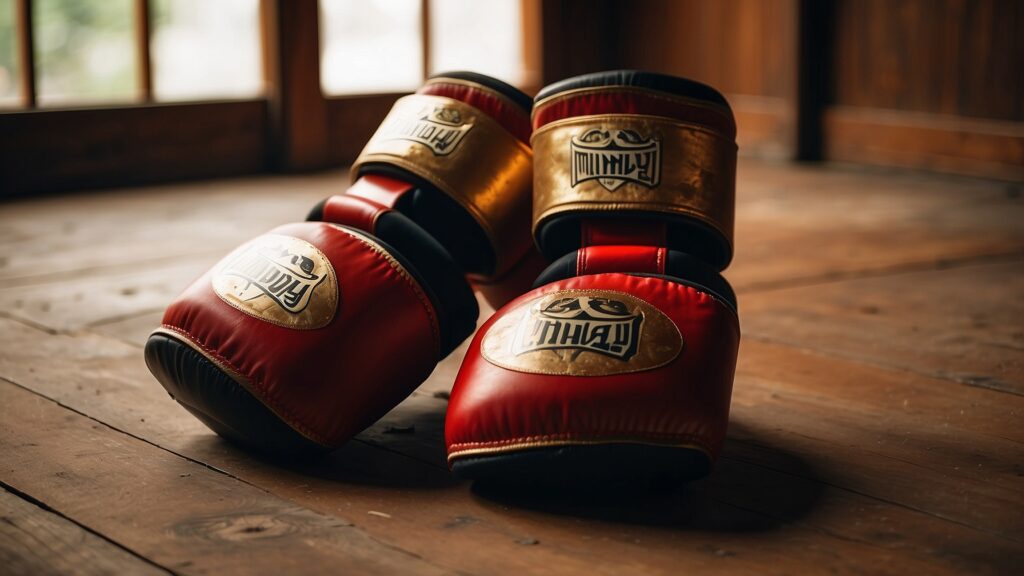
Most people searching for the 13 types of martial arts find a numbered list with no explanation of why the number is 13 and not 20, 8, or 200. Here's the honest answer: the number is arbitrary. What isn't arbitrary are the categories — striking, grappling, hybrid, internal, and weapon-based — and the major global systems that anchor each one.
I've trained in four countries across twelve years, and the question I get most from beginners isn't "which style is best?" It's "where do I even start?" This guide answers that. We'll cover the 13 most foundational, globally recognized martial arts systems, explain how they actually work (not just what they're called), and show you how they connect to each other historically. By the end, you'll know exactly which direction fits your goals.
- In This Guide
- Why These 13 Martial Arts Matter
- The Striking Arts: Where Fists, Feet, and Elbows Lead
- The Grappling Arts: Ground Fighting and Throws
- The Internal and Philosophical Systems: Qi, Meditation, and Real Combat
- The Hybrid and Modern Systems: When Styles Blend
- The Weapon-Based and Ceremonial Arts: Steel, Tradition, and Discipline
- Choosing the Right Martial Art for Your Goals
- The Overlap and Lineage: Why These 13 Connect
- What These 13 Don't Cover (And Why That's Okay)
- Start Training: First Steps in Your Chosen Art
- The 13 Types of Martial Arts: What to Do Next
- FAQ
In This Guide
- Why These 13 Martial Arts Matter
- The Striking Arts: Fists, Feet, and Elbows
- The Grappling Arts: Ground Fighting and Throws
- The Internal and Philosophical Systems
- The Hybrid and Modern Systems
- Weapon-Based and Ceremonial Arts
- Choosing the Right Martial Art for Your Goals
- The Overlap and Lineage: Why These 13 Connect
- What These 13 Don't Cover
- Start Training: First Steps
Why These 13 Martial Arts Matter
The difference between 'types' and 'styles' — and why it matters
A type of martial art is a broad category based on what the art does mechanically. A style is a specific system within that category. Muay Thai and Korean Taekwondo Roots are both striking styles — but they belong to the same type. Judo and Brazilian Jiu-Jitsu are both grappling styles within the same type. Confusing types with styles is why you get articles claiming there are 180 types of martial arts. There aren't 180 types. There are hundreds of styles organized under a handful of types.
The 13 systems in this guide were chosen because they represent the widest global reach, the deepest historical roots, or the most distinct mechanical logic. Some are ancient. Some are 20th-century inventions. All of them have shaped how millions of people train today.
How martial arts are classified: striking, grappling, and hybrid systems
The cleanest way to classify martial arts is by what they prioritize in a fight:
- Striking arts — punches, kicks, elbows, knees (Muay Thai, Karate, Taekwondo)
- Grappling arts — throws, takedowns, joint locks, chokes (Judo, BJJ, Japanese Jiu-Jitsu)
- Internal arts — movement quality, energy redirection, body mechanics (Tai Chi, Wing Chun, Aikido)
- Hybrid arts — deliberate combinations of the above (Krav Maga, Jeet Kune Do, Hapkido)
- Weapon-based arts — tools as the primary medium (Kendo, Capoeira)
None of these categories is perfectly sealed. Muay Thai clinch work is grappling. Judo players punch in self-defense. But the primary emphasis of each system tells you what it was designed to solve.
What you'll actually learn from this guide
This isn't an encyclopedia entry. It's a practical breakdown of what each art trains, how the mechanics actually feel, and where each system came from. If you've ever stood in front of a martial arts school and wondered which door to walk through, this is for you.
> DID YOU KNOW: The word "karate" literally means "empty hand" in Japanese — a reference to fighting without weapons, not to any specific technique set. The name was standardized in the early 20th century when Gichin Funakoshi brought Okinawan fighting methods to mainland Japan.
The Striking Arts: Where Fists, Feet, and Elbows Lead
Muay Thai — the art of eight limbs
Muay Thai is Thailand's national combat sport and one of the most complete striking systems ever developed. It uses fists, elbows, knees, and kicks — eight points of contact versus boxing's two. The clinch is where Muay Thai separates itself from every other striking art. Step into a Muay Thai clinch and you feel the other person's weight pressing down through your neck, their knee driving into your thigh before you even process the grip. It's close, heavy, and relentless.
The hip mechanics in Muay Thai are rotational but grounded. Kicks come from the whole body turning like a gate swinging on a hinge — the foot arrives as a byproduct of the hip, not the other way around. I spent three years in Chiang Mai learning to stop muscling my roundhouse and start rotating, and the difference in power was embarrassing.
Taekwondo — speed and high kicks
Taekwondo is a Korean striking art that became an Olympic sport in 2000. It prioritizes speed and range over power, with a heavy emphasis on head-height kicks. The mechanical logic is simple: long legs create distance, and distance controls the fight. Taekwondo practitioners train their hips to open fast — a spinning heel kick from a good Taekwondo athlete arrives before you see it load.
You'd think high kicks are reckless. Against a trained Taekwondo fighter, they're not — because the footwork keeps you at exactly the range where those kicks land and punches don't.
Karate — the Japanese foundation
Karate developed in Okinawa, drawing from Chinese martial arts before Gichin Funakoshi formalized it in Japan in the 1920s. It's a striking art built around linear power — punches and kicks that drive straight through the target rather than around it. The kiai (the sharp exhale on impact) isn't theater. It braces the core and maximizes force transfer at the moment of contact.
Karate stances are lower and wider than Muay Thai's. The trade-off is stability over mobility. Different problem, different solution.
Kickboxing — Western striking meets kicks
Kickboxing is a 20th-century synthesis, particularly the Dutch school that emerged in the 1970s. Dutch kickboxers combined Western boxing's hand combinations with Muay Thai-style kicks, producing a style built for aggressive forward pressure. The footwork is lighter than Muay Thai. The hands are busier. It's striking designed for sport competition — and it's brutally effective at what it does.
The Grappling Arts: Ground Fighting and Throws
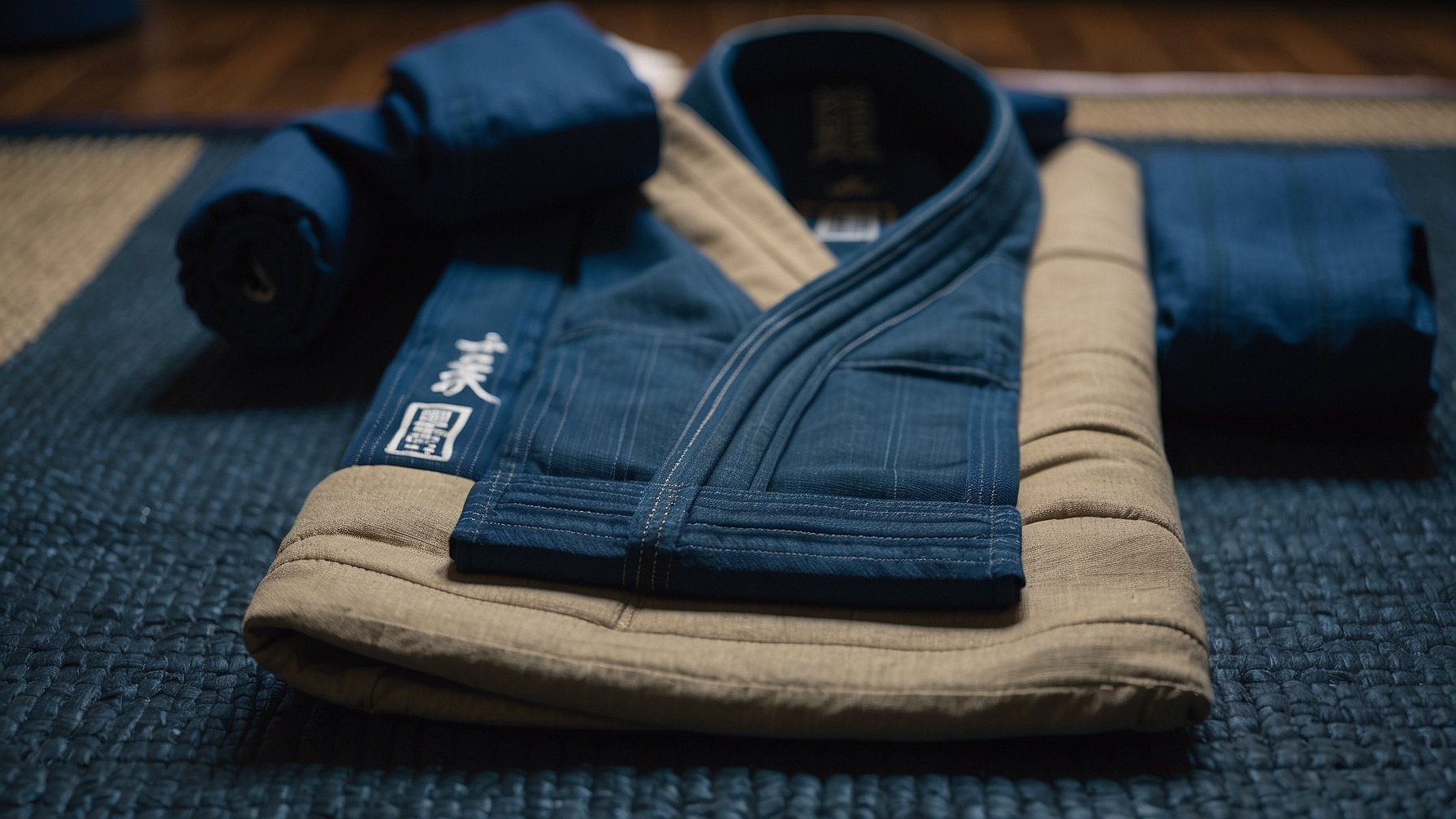
Brazilian Jiu-Jitsu — the modern grappling revolution
Brazilian Jiu-Jitsu (BJJ) is the art that changed modern combat sports more than any other single system. Hélio Gracie and his family adapted Mitsuyo Maeda's Judo and Japanese Jiu-Jitsu Origins teachings in Brazil during the 1920s and 30s, building a system specifically designed to allow a smaller person to control and submit a larger one on the ground.
BJJ's core insight is positional control. Before you attempt a submission, you establish a dominant position — mount, back control, side control. The submission follows from position like a conclusion follows from an argument. You feel this in rolling: a good BJJ player doesn't muscle anything. They just keep ending up on top, or behind you, until you tap.
Judo — throwing and momentum control
Judo was created by Jigoro Kano in Japan in 1882. Kano stripped Japanese Jiu-Jitsu down to its most efficient throws and developed a training methodology — randori (free practice) — that let practitioners train full-speed without killing each other. The result was a system built around redirecting an opponent's momentum rather than opposing it.
A Judo throw at full speed is startling. One second you're standing, the next the ceiling is where the floor was. The entry is the hard part — getting the grips, breaking the opponent's balance, and executing the throw in a single connected movement before they react.
Japanese Jiu-Jitsu — the ancestor of BJJ and Judo
Japanese Jiu-Jitsu (or Jujutsu) is the root system. Samurai needed a way to fight when their weapons were lost or useless at close range — Jujutsu was the answer. It includes throws, joint locks, chokes, and strikes, without the sport constraints that Judo and BJJ later imposed. It's less refined for competition and more complete as a self-defense system.
Fists don't end up in museums. You can't put a grappling throw in a glass case. That's part of why grappling arts are harder to trace historically than sword traditions — and why Japanese Jiu-Jitsu's origins are murkier than most sources admit.
Aikido — redirecting force instead of meeting it
Aikido was developed by Morihei Ueshiba in the 1920s-40s, drawing from Daito-ryu Aiki-jujutsu. The central principle is aiki — harmonizing with an attacker's force and redirecting it. A wrist lock in Aikido doesn't work by strength. It works by controlling the angle so the opponent's own momentum carries them into the technique.
Aikido is genuinely controversial in combat sports circles. I've seen it work beautifully in controlled practice and fall apart under pressure. The honest take: the principles are sound, but they require a level of sensitivity that takes years to develop and a partner who's actually attacking with intent.
> TIP: If you're choosing between Judo and BJJ for self-defense, consider your body type. Judo's throws are devastating on concrete but require explosive hip drive. BJJ's ground control is more accessible for smaller frames or older beginners. Neither is universally better — they solve different problems.
The Internal and Philosophical Systems: Qi, Meditation, and Real Combat
Tai Chi — slow movement, serious application
Here's where most Western fighters make a mistake. Tai Chi (Taijiquan) gets written off as slow-motion exercise for retirees. That's a misreading of what the slow practice is for. The slow form is a tool for developing body awareness, weight transfer, and structural alignment — the same qualities that make a Judo throw work. Push hands practice, where two Tai Chi practitioners apply the principles against each other, looks nothing like the park routines most people associate with the art.
The martial application of Tai Chi is real. The slow practice is the laboratory. The speed comes later, once the mechanics are internalized.
Kung Fu — the umbrella art with a thousand branches
Kung Fu (Wushu or Gongfu) isn't a single style — it's a category containing hundreds of Chinese martial arts systems. Shaolin Kung Fu, Hung Gar, Baguazhang, Praying Mantis, Northern Eagle Claw — each is distinct in footwork, hand positions, and strategic logic. What they share is a Chinese cultural and philosophical root, and a training methodology that integrates physical conditioning, form practice, and application.
The breadth of Kung Fu is its greatest strength and its biggest marketing problem. Because the category is so vast, it's easy to find schools that train hard and effective — and equally easy to find schools that train nothing but forms with no pressure testing.
Wing Chun — close-range economy of motion
Wing Chun is a Chinese striking and trapping system optimized for close range — elbow distance, specifically. Where Karate generates power through hip rotation and extension, Wing Chun generates power through structure and chain punching. The chain punch (a rapid series of vertical-fist strikes) isn't about knockout power on any single punch. It's about occupying the centerline and accumulating damage faster than the opponent can process.
At elbow distance, most striking arts run out of room. Wing Chun is built for exactly that space. Bruce Lee trained Wing Chun under Ip Man before developing his own approach — and the influence shows in his hand speed and centerline obsession.
The Hybrid and Modern Systems: When Styles Blend
Krav Maga — Israeli self-defense under pressure
Krav Maga was developed by Imi Lichtenfeld in the 1940s-50s for the Israeli Defense Forces. The design brief was simple: make soldiers effective in real violence as fast as possible. No forms, no rituals, no sport rules. Krav Maga borrows from Boxing, Wrestling, Judo, and street fighting, prioritizing aggression, simultaneous defense-attack, and targeting vulnerable areas.
I respect Krav Maga's core logic completely. What I'm skeptical about is a lot of the commercial Krav Maga that's spread globally — schools that sell the brand without the intensity. Real Krav Maga training is exhausting and stressful by design. If the class feels comfortable, something's off.
Jeet Kune Do — Bruce Lee's 'absorb what is useful'
Jeet Kune Do (JKD) isn't a style — Bruce Lee said so explicitly. It's a philosophy of martial arts practice built on the idea that no single system has all the answers. Lee drew from Wing Chun, Western Boxing, Fencing, and Wrestling to build a personal fighting method, then encouraged his students to do the same rather than copy his specific techniques.
The phrase "absorb what is useful, reject what is useless" sounds simple. In practice, it means you need enough depth in multiple arts to know what's worth keeping. JKD without that depth is just eclecticism without a compass.
Hapkido — Korean grappling and striking fusion
Hapkido is a Korean martial art that combines joint locks and throws (drawn from Daito-ryu Aiki-jujutsu) with kicks and strikes. Where Taekwondo stays at long range, Hapkido works at every distance. The joint lock entries off a kick defense are particularly elegant — the kick creates the opening, the lock closes it.
The 13 Types of Martial Arts at a Glance
| Art | Primary Type | Origin | Best For | Sparring Intensity |
|---|---|---|---|---|
| Muay Thai | Striking | Thailand | Self-defense, sport | High |
| Taekwondo | Striking | Korea | Sport, agility | High |
| Karate | Striking | Okinawa/Japan | Foundation, discipline | Moderate–High |
| Kickboxing | Striking/Hybrid | Western/Dutch | Sport, fitness | High |
| Brazilian Jiu-Jitsu | Grappling | Brazil | Self-defense, sport | High |
| Judo | Grappling | Japan | Throws, self-defense | High |
| Japanese Jiu-Jitsu | Grappling | Japan | Self-defense | Moderate |
| Aikido | Internal/Grappling | Japan | Redirection, philosophy | Low–Moderate |
| Tai Chi | Internal | China | Longevity, body mechanics | Low |
| Kung Fu | Striking/Internal | China | Tradition, breadth | Varies |
| Wing Chun | Striking/Internal | China | Close range, efficiency | Moderate |
| Krav Maga | Hybrid | Israel | Self-defense, military | High |
| Jeet Kune Do | Hybrid | USA (Bruce Lee) | Cross-training philosophy | Moderate–High |
> KEY TAKEAWAY: No single martial art covers everything. The 13 types of martial arts each solve a specific problem — different ranges, different contexts, different bodies. The best art is the one you'll actually train consistently for years.
The Weapon-Based and Ceremonial Arts: Steel, Tradition, and Discipline
Kendo — the way of the sword
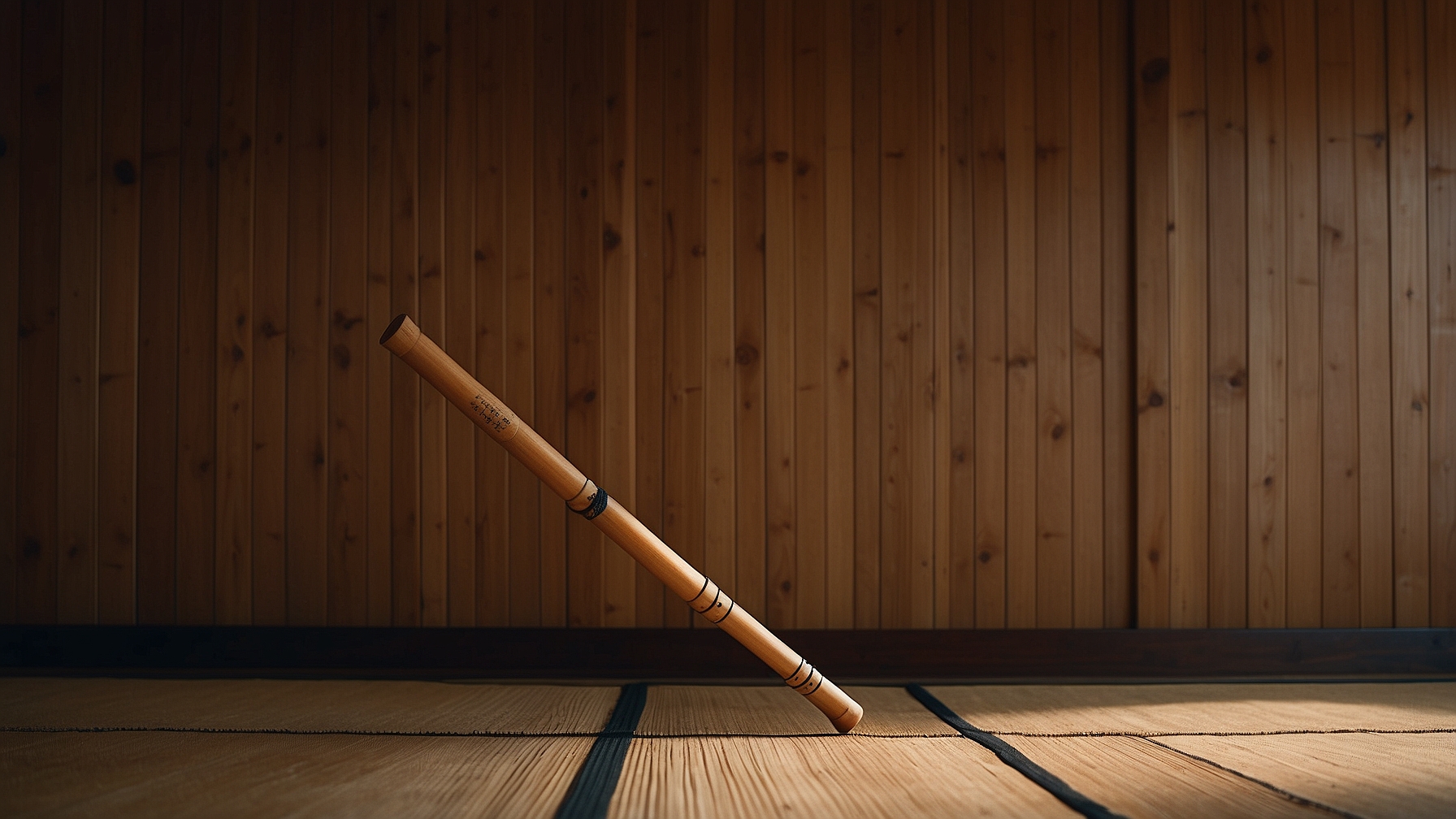
Kendo is Japan's sword art, practiced with bamboo shinai and protective armor (bogu). It descends from The Japanese Kenjutsu Legacy of the samurai, formalized as a sport and discipline in the Meiji era. What makes Kendo distinct isn't the weapon — it's the lesson in distance and timing that the weapon forces you to learn.
In Kendo, the critical range is called ma-ai — the interval between you and your opponent where neither can strike without committing. Reading that interval, controlling it, forcing your opponent to move first — these are the skills Kendo develops. They transfer directly to any other martial art that involves distance management.
The sound of a Kendo match is striking: the crack of shinai on armor, the sharp shout (kiai) that accompanies each strike, the shuffle of feet on the floor. It's rhythmic in a way that feels almost musical until someone takes a clean hit to the head and you remember what's actually being practiced.
Capoeira was developed by enslaved Africans in Brazil, likely from the 16th century onward. The disguise-as-dance story is real: practitioners hid combat training inside movement that looked ceremonial to overseers. The ginga (the constant swaying base movement) isn't decoration. It's a live evasion pattern that makes you a moving target while you read your opponent.
I watched a Capoeira roda in Salvador, Bahia years ago, and what struck me wasn't the acrobatics — it was the timing. The sweeps and kicks land in the gaps between movements, invisible until they arrive. The rhythm of the berimbau (a single-string instrument) sets the tempo of the exchange. When the tempo changes, the game changes. That's not ceremony. That's tactical communication.
Capoeira's history is inseparable from the history of African resistance in the Americas. The Smithsonian Magazine has covered this history in depth for readers who want the full context.
Choosing the Right Martial Art for Your Goals
Self-defense: which arts deliver practical results fastest
For real-world self-defense with the shortest learning curve, the honest answer is BJJ plus Muay Thai. BJJ teaches you to survive and control on the ground — where most real fights end up. Muay Thai teaches you to create distance, damage, and exit. Together, they cover the two most common scenarios: standing exchanges and clinch/ground situations.
Krav Maga is a legitimate option if you find a school that actually stress-tests its techniques. The problem isn't the system — it's the variance in school quality.
Sport and competition: where to go if you want to test yourself
If competition is your goal, the path is clearer:
- BJJ — gi and no-gi tournaments at every level globally
- Judo — Olympic sport with a deep competition structure
- Taekwondo — Olympic sport, heavy emphasis on scoring kicks
- Muay Thai/Kickboxing — amateur and professional circuits worldwide
- Kendo — national and international tournament circuits
Fitness and longevity: which styles work for your body and age
Age changes the math. Explosive Judo throws are hard on the body past 50. High-kick Taekwondo requires hip flexibility that degrades without maintenance. Tai Chi is genuinely excellent for older practitioners — the slow movement builds proprioception and balance in ways that reduce fall risk and improve joint health. BJJ at a moderate pace (drilling without full-intensity rolling) stays accessible well into middle age.
I started recommending Tai Chi to training partners in their 60s not as a consolation prize but as a serious practice. The ones who stuck with it moved better after two years than they had in a decade.
Philosophy and tradition: learning beyond the technique
Some people come to martial arts for the technique. Others come for the structure, the community, the sense of lineage. Kendo, Karate, and Aikido all carry deep philosophical frameworks — the concept of Do (the Way) in Japanese arts points toward lifelong practice as a path of self-development, not just a fighting skill. If that resonates with you, it's a legitimate reason to choose a traditional art over a purely functional one.
The Overlap and Lineage: Why These 13 Connect
The Asian roots: how Chinese, Japanese, and Korean systems influenced each other
The family tree of Asian martial arts is tangled in the best way. Chinese martial arts (Kung Fu) traveled to Okinawa and influenced what became Karate. Judo was created by systematizing Japanese Jiu-Jitsu. Mitsuyo Maeda, a Judo champion, traveled to Brazil in 1914 and taught the Gracie family — which is how BJJ was born. Korean arts like Taekwondo and Hapkido drew from Japanese Karate and Daito-ryu Aiki-jujutsu respectively, then developed their own distinct identities after Korea's liberation from Japanese occupation in 1945.
This isn't trivia. It explains why certain techniques appear across styles that seem unrelated. The outside leg reap in Judo (osoto-gari) shows up in BJJ takedowns, in Hapkido, and in Krav Maga. Same mechanical logic, different names, different contexts.
The Western evolution: how European boxing shaped kickboxing and Krav Maga
Western boxing — with its footwork, head movement, and combination punching — fed directly into Kickboxing and Krav Maga. The Dutch Kickboxing schools of the 1970s and 80s were explicit about this: they sent fighters to Thailand to learn Muay Thai, then layered Dutch boxing combinations on top. The result was fighters like Ramon Dekkers, who won multiple Muay Thai titles in Thailand as a foreigner — an almost unheard-of achievement at the time.
The modern synthesis: why hybrid arts are becoming the norm
Pure, isolated styles are increasingly rare. MMA competition since the 1990s has made cross-training the default. A competitive fighter today typically trains striking (Muay Thai or Kickboxing), wrestling (Freestyle or Greco-Roman), and ground work (BJJ). The 13 types of martial arts in this guide are the building blocks of that synthesis. Understanding them separately helps you understand why the combination works.
What These 13 Don't Cover (And Why That's Okay)
Regional and niche systems worth knowing about
The 13 systems here cover the major lineages and global reach — but the full landscape extends well beyond them. Worth knowing:
- Sambo — Soviet-era combat sport combining Judo and Wrestling, still dominant in Russian MMA
- Sanda (Sanshou) — Chinese full-contact kickboxing with throws, used in Chinese military training
- Muay Boran — the older, less-codified predecessor to modern Muay Thai
- Pankration — ancient Greek combat sport combining striking and grappling, ancestor of modern MMA
- Silat — Southeast Asian martial art with a strong blade tradition, practiced across Malaysia, Indonesia, and the Philippines
None of these made the core 13 because this guide prioritizes global accessibility and training availability. You can find a BJJ school in most cities. Finding a legitimate Pankration instructor is considerably harder.
The difference between 'martial art' and 'fighting sport'
A martial art is a system of combat techniques with a training methodology and often a philosophical framework. A fighting sport is a competitive ruleset applied to those techniques. Judo is a martial art. IJF competition Judo is a fighting sport. The distinction matters because sport rules shape technique — competitive Judo has largely abandoned leg grabs because the rules banned them in 2010, even though leg grabs are legitimate self-defense tools.
Why the number 13 is arbitrary but useful
I'll be direct: there is no authoritative body that certifies exactly 13 types of martial arts. The number reflects a useful scope — enough to cover the major striking, grappling, internal, hybrid, and weapon-based traditions without becoming an encyclopedia. If you've read this far, you understand the categories better than the number. That's the point.
Start Training: First Steps in Your Chosen Art
What to expect in your first class
Your first class will feel overwhelming regardless of the art. There's new vocabulary, new body positions, and the social awkwardness of being the person who doesn't know the warm-up routine. This is normal. Every person in that room was you once. The only thing that matters in the first class is that you come back for the second one.
Physically, expect to use muscles you didn't know you had. A first BJJ class leaves your grip exhausted. A first Muay Thai class leaves your shins tender and your hips stiff. A first Kendo class leaves your forearms burning from gripping the shinai. All of this passes within two to three weeks as your body adapts.
How to find a legitimate instructor
Here are my red flags for instructors worth avoiding:
- No sparring, ever — a school that never pressure-tests its techniques is selling theater, not martial arts
- Rank inflation — black belts handed out in 18 months, or instructors who can't name their own lineage
- Cult dynamics — excessive reverence for the instructor, discouragement of questions, pressure to commit financially before you've trained
- Excessive mysticism as a substitute for mechanics — "secret techniques" and "chi power" without any physical explanation
A good instructor can explain why a technique works in terms of body mechanics, leverage, and timing. They don't need mysticism to fill the gaps.
The timeline: when you'll actually see results
Realistic expectations, by phase:
- 3–6 months: Basic competence. You understand the core movements, can follow class without confusion, and start to feel the technique working occasionally.
- 1–2 years: Real skill. You can apply techniques under pressure against beginners, your movement has internalized the art's base mechanics, and you have a sense of your own strengths and gaps.
- 5+ years: Mastery begins. You stop thinking about individual techniques and start reading situations. This is where the art becomes yours.
The timeline varies by art. BJJ has a notoriously long skill curve — a blue belt (typically 1–2 years) in BJJ is genuinely skilled. A Muay Thai practitioner with two years of serious training can compete at amateur level. Tai Chi's internal skills take longer to develop but don't have an age ceiling.
> TIP: Don't choose a martial art based on what looks impressive on screen. Choose based on what you'll actually train three times a week for the next two years. The best martial art is the one you stick with.
The 13 Types of Martial Arts: What to Do Next
The 13 types of martial arts covered here — Muay Thai, Taekwondo, Karate, Kickboxing, BJJ, Judo, Japanese Jiu-Jitsu, Aikido, Tai Chi, Kung Fu, Wing Chun, Krav Maga, and Jeet Kune Do — aren't a complete list of everything that exists. They're a map of the major territory. The lineages connect, the mechanics overlap, and understanding one makes the others easier to read.
I've trained in most of these and been humbled by all of them at some point. The lesson that stuck hardest: the art matters less than the quality of the training. A mediocre school of a "superior" art will lose to a serious school of a "simpler" one every time.
Three specific next steps:
- Pick one art from the table above that matches your primary goal (self-defense, sport, fitness, or philosophy). Don't try to pick the "best" one. Pick the one that fits your life right now.
- Visit two or three local schools before committing. Watch a class. Talk to students, not just the instructor. Notice whether people are training hard and having fun — both matter.
- Commit to 90 days before evaluating whether the art is right for you. One month isn't enough to know. Three months is the minimum honest trial.
For a deeper look at how these arts connect historically, the Martial Arts Studies journal at the University of Wisconsin Press publishes peer-reviewed research on martial arts history and practice — worth bookmarking if you want to go beyond the basics.
FAQ
What are the main categories of martial arts?
Martial arts break into five main categories: striking arts (Muay Thai, Karate, Taekwondo), grappling arts (BJJ, Judo, Japanese Jiu-Jitsu), internal arts (Tai Chi, Wing Chun, Aikido), hybrid systems (Krav Maga, Jeet Kune Do, Hapkido), and weapon-based arts (Kendo, Capoeira). Most styles fit primarily into one category while borrowing from others.