
Aztec Warrior Training: How the Mexica Forged History's Most Disciplined Fighters

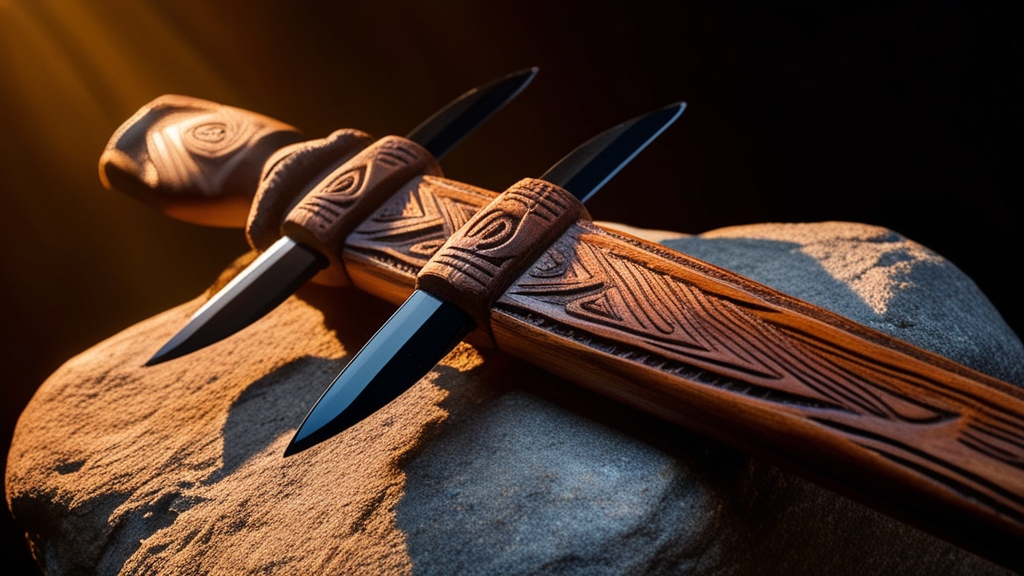
What kind of society looks at a five-year-old boy and says: your whole childhood is preparation for war? The Mexica did. And not just for the sons of nobles or generals — for every boy, regardless of birth. Aztec warrior training wasn't a program you opted into. It was the operating system of an entire civilization, running from the cradle to the first captive you dragged off a battlefield. Most accounts reduce it to "they trained hard and used obsidian swords." That misses almost everything. The real system was physical, psychological, spiritual, and social all at once — and understanding it changes how you see ancient warfare entirely.
- Before the First Battle, There Was the Classroom
- What the Telpochcalli Actually Taught
- The Weapons of Aztec Combat and How Warriors Trained to Use Them
- Mock Combat, Festivals, and the Ritual Side of Training
- The Flower Wars: Live Training at Scale
- Diet, Rest, and the Physical Culture Behind the Fighter
- Elite Warriors: Jaguar Knights and Eagle Warriors
- What Modern Martial Artists Can Take From Aztec Training Methods
- The Making of a Mexica Warrior
-
FAQ
- How were Aztec warriors trained from childhood?
- What weapons did Aztec warriors train with?
- What were the Flower Wars and how did they train Aztec soldiers?
- How did an Aztec warrior earn a higher rank?
- What did Aztec warriors eat to maintain their fitness?
- What is the difference between Eagle Warriors and Jaguar Warriors?
Before the First Battle, There Was the Classroom
Forget the image of warriors born on the battlefield. Mexica military culture began in school. Long before a boy ever held a weapon in anger, he was already being shaped into a fighter — through curriculum, community, and the weight of cosmic obligation.
Why Every Aztec Boy Was a Soldier-in-Training
In Mexica society, military service wasn't a career path. It was a civic duty baked into the culture at every level. Boys began receiving basic instruction from around age six, with formal schooling starting closer to fifteen. The Spanish chroniclers who observed the Mexica after 1519 noted their warriors' extraordinary courage and physical conditioning — and that didn't happen by accident. It happened because the entire educational system was, at its core, a military preparation system.
The logic behind this was partly practical and partly cosmological. The Mexica believed the sun required human blood to keep moving across the sky. War wasn't just politics — it was a religious obligation. Every warrior was, in a sense, feeding the universe. That's not a metaphor I'm using loosely. It was a lived belief that gave combat a weight and urgency most modern soldiers never feel.
The Two Schools: Telpochcalli vs. Calmecac
Here's where most guides stop at the surface. There were two main educational institutions in Mexica society, and they produced very different kinds of warriors.
The telpochcalli ("house of youth") was the school for commoners. Boys from ordinary families trained here under veteran warriors, learning combat skills, discipline, and communal living. It was rough, practical, and focused on producing capable fighters fast.
The calmecac was the priestly and noble school — but don't mistake it for soft. Calmecac students trained just as hard physically, but they also received instruction in astronomy, law, ritual, and strategy. The warriors who emerged from calmecac were expected to lead. They understood the political and spiritual architecture of war, not just the mechanics of it.
Your path depended on birth rank. Commoners went to telpochcalli. Sons of nobles and priests went to calmecac. Both paths ended on the same battlefield — but with very different roles waiting for them there.
What the Telpochcalli Actually Taught
I've spent time researching training systems across cultures — Muay Thai, Japanese bujutsu, Filipino kali — and the telpochcalli curriculum holds up surprisingly well against all of them. It was structured, progressive, and built around real-world outcomes.
Physical Conditioning: Running, Carrying, and Endurance Work
The physical base of Aztec warrior training was unglamorous. No elaborate techniques. Just load, distance, and time.
Students ran long distances daily. They carried heavy loads — firewood, supplies, building materials — not as punishment but as deliberate conditioning. Think of it as what modern coaches call general physical preparedness (GPP): building the engine before you tune the gearbox. A warrior who couldn't march twenty miles with gear and still fight at the end of it was useless on campaign.
Sleep deprivation was also part of the curriculum. Trainees were regularly kept up late for ritual duties and woken before dawn. The goal was to normalize discomfort — to make exhaustion a familiar state rather than a crisis. Any combat athlete who has done a hard training camp knows this feeling. You stop being scared of tired.
Weapons Drills and the Art of the Macuahuitl
The signature weapon of the Mexica warrior was the macuahuitl — a flat wooden club edged with obsidian blades set into grooves along both sides. Pick one up (the replicas in Mexican museums give you the idea) and the first thing you notice is the balance. It's not a sword and it's not a club. It sits somewhere between, with the obsidian edges doing cutting work while the wooden body delivers blunt force. Spanish accounts describe it cutting off a horse's head in a single blow. I believe it.
Drilling with the macuahuitl focused on diagonal cuts, hooking motions, and close-range control — because the goal wasn't to kill. More on that shortly. Students also trained with the tepoztopilli, a pole weapon with an obsidian-edged head, used for thrusting and keeping opponents at range. Weapons practice happened in groups, supervised, with clear progressions from basic form to sparring.
Learning from Veterans: The Telpochyahqui System
The most underrated element of the telpochcalli was its mentorship structure. Experienced warriors called telpochyahqui supervised novice fighters directly — not from a lectern but hands-on, in drills, on marches, and eventually in actual combat. A veteran took personal responsibility for the boys under his charge.
This is the same model that works in every serious martial arts tradition I've trained in. You don't learn to fight from a textbook. You learn it from someone who has already been there, watching your grip, correcting your footwork, telling you what the books leave out. The Mexica institutionalized this. It wasn't informal mentorship — it was the official pedagogical method.
The Weapons of Aztec Combat and How Warriors Trained to Use Them
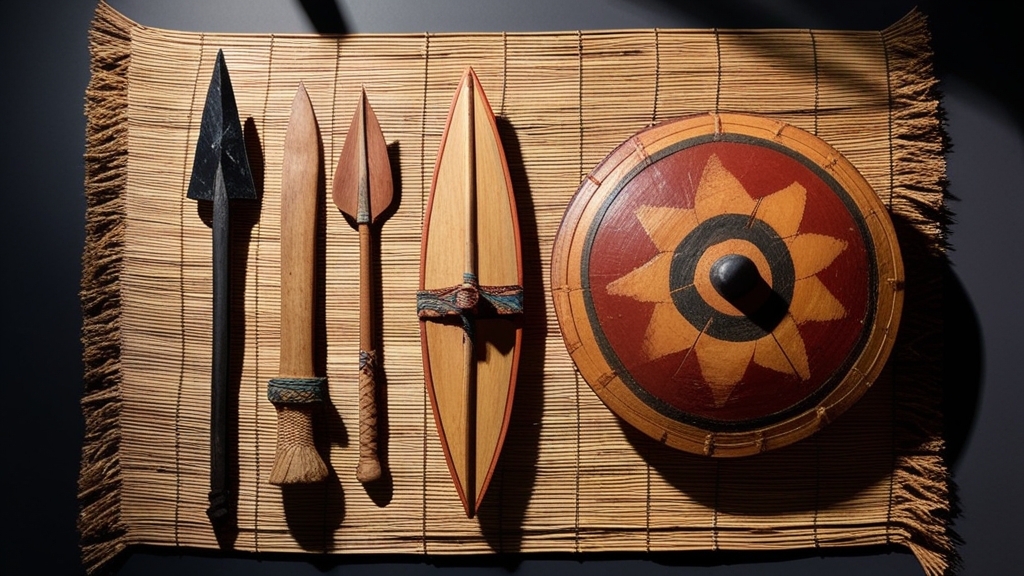
Aztec military training was weapons-specific in ways most guides gloss over. Each weapon had its own mechanical logic and its own training method.
The Macuahuitl, Atlatl, and Tepoztopilli: Mechanics and Drilling
Three weapons defined Mexica battlefield capability:
- Macuahuitl: The obsidian-edged wooden club, used in close quarters. Diagonal slashing and hooking were the core techniques. The obsidian edges were razor-sharp but brittle — you didn't parry metal with them. You used the flat.
- Atlatl: A spear-throwing device that extended the arm's lever, launching darts with enough force to punch through Spanish armor at range. Training with the atlatl was about timing and body mechanics — the hip rotation and follow-through look almost identical to a good javelin throw.
- Tepoztopilli: The obsidian-tipped spear, used to control distance and create openings for closer weapons. Think of it as the jab in a boxing combination — it sets up everything else.
Drilling combined these weapons in sequence, teaching warriors to transition between range and close quarters. The battlefield was not a static duel. It was a fluid, chaotic press of bodies, and Mexica training reflected that.
Shields, Armor, and the Ichcahuipilli: Training With Full Kit
The ichcahuipilli was a quilted cotton armor, sometimes soaked in brine to harden it. It sounds primitive until you realize it was genuinely effective against obsidian weapons and arrows — the Spanish eventually adopted versions of it themselves because steel plate was too heavy in the Mexican heat.
Trainees drilled in full kit. Shield work — using the chimalli, a round shield of wood and hide — was integrated into weapons training from the start. You learned to cut and to cover simultaneously. Moving with armor changes your footwork, your breathing, your sense of distance. Training without it and then wearing it in battle is a recipe for disaster. The Mexica knew this.
Capture Over Kill: The Tactical Doctrine That Shaped Every Drill
Here's the thing most guides miss entirely — and it's the most important tactical fact in all of Aztec warrior training.
The goal in battle was not to kill your opponent. It was to capture him alive for sacrifice. A dead enemy was a failed objective. This single doctrine reshaped every drill, every weapon choice, every combat technique. You trained to wound, immobilize, and subdue — not to finish. The macuahuitl's design makes more sense in this light: it could maim a limb without killing, leaving an opponent incapacitated and capturable.
This is where Mexica combat diverges sharply from, say, European medieval warfare. A knight trained to kill efficiently. A Mexica warrior trained to take prisoners efficiently. The techniques look similar from the outside. The intent is completely different.
Mock Combat, Festivals, and the Ritual Side of Training
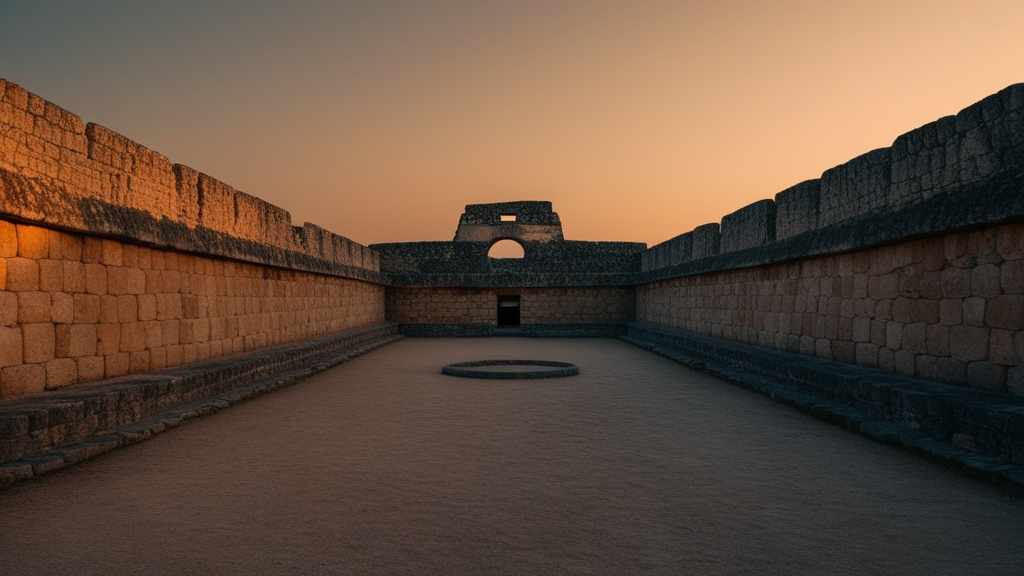
You can't separate Aztec warrior training from ceremony. The two were fused at every level. Religious festivals weren't breaks from training — they were training, dressed in ritual.
Festival Combat Drills: Tlacaxipehualiztli and Ritual Sparring
During the festival of Tlacaxipehualiztli (the festival of the flaying of men, held in the second month of the Mexica calendar), young warriors participated in mock combat — competing as teams against each other for prizes and prestige. This wasn't play. It was a structured evaluation under public scrutiny, with experienced warriors watching and judging.
I think of it like a hard sparring round at the end of a training camp. Everyone is watching. The pressure is real. You perform or you don't, and the whole community sees which one it is. That kind of social pressure is a training tool in itself.
The Ballgame (Tlachtli) as Athletic and Strategic Conditioning
The tlachtli ballgame — sometimes called ullamaliztli — is usually discussed as religion or spectacle. Its conditioning value gets ignored. Players drove a heavy rubber ball using only their hips, knees, and elbows, moving laterally at speed across a stone court. The hip mobility, lateral quickness, and explosive lower-body power required map almost perfectly onto what a warrior needed in close-quarters combat.
The game also had strategic dimensions: reading movement, anticipating angles, reacting under pressure. These aren't separate skills from combat. They're the same skills in a different context. The Mexica weren't drawing a sharp line between sport and warfare preparation — they were using one to build the other.
How Ceremony and Combat Were Never Fully Separate
The religious framework of Mexica warrior culture wasn't decoration on top of the training system. It was the motivational and psychological architecture holding the whole thing up. A warrior who believed his captures literally fed the sun fought with a different quality of purpose than one fighting for territory or pay.
Well — that's easy to romanticize from the outside. But the practical effect was real: the Mexica produced warriors of exceptional bravery and discipline, and their contemporaries noticed it. The psychological engine behind that was belief, not just technique.
The Flower Wars: Live Training at Scale
If the telpochcalli was the classroom, the Flower Wars were the final exam. Held regularly between the Mexica and neighboring city-states (particularly Tlaxcala, Huexotzinco, and Cholula), these were formalized conflicts with agreed rules of engagement.
What the Xochiyaoyotl Actually Were (and Weren't)
The term xochiyaoyotl (Flower War) gets misrepresented constantly. They were not simply "practice wars" or friendly competitions. Scholars debate their full purpose, but the consensus is that they served multiple functions simultaneously: they provided captives for sacrifice, they pressure-tested warriors in live combat, and they maintained a state of military readiness without the full cost of total war.
Think of them less like a sparring match and more like a controlled live-fire exercise — with real consequences. People died. Captives were taken and sacrificed. The "flower" in the name referred to the beauty of the combat and the value of the captives, not to any gentleness in the fighting.
How Young Warriors Earned Their First Captive
For a young Mexica warrior, the single most important career milestone was capturing his first enemy alone. Not as part of a group — alone. A group capture counted, but it was shared credit and carried less prestige. A solo capture announced you as a real warrior.
Until that moment, a trainee wore his hair in a distinctive style that marked him as uncaptured — essentially advertising his novice status to everyone who saw him. The social pressure to take that first captive was immense. It wasn't just about rank. It was about identity.
Rank, Prestige, and the Feedback Loop of Combat Experience
The Mexica military rank system was tied directly to captive counts. Here's how it worked:
| Captives Taken | Status / Title | Privileges Earned |
|---|---|---|
| 1 (solo) | Novice warrior confirmed | New hairstyle, basic warrior status |
| 2-3 | Experienced warrior | Better equipment, higher social standing |
| 4+ | Eligible for elite orders | Access to cuāuhtli (Eagle) or ocēlōmeh (Jaguar) orders |
| Exceptional record | Senior commander | Command roles, land grants, political influence |
This feedback loop was elegant. Combat experience produced rank. Rank produced better equipment and opportunities. Better opportunities produced more combat experience. The system rewarded the best fighters with more chances to fight — and kept improving the overall quality of the force.
Diet, Rest, and the Physical Culture Behind the Fighter
Every serious training system runs on fuel. The Mexica understood this, even if they didn't have sports nutrition science to name what they were doing.
What Aztec Warriors Ate: Maize, Amaranth, and Campaign Rations
The staple of the Mexica diet was maize — tortillas, tamales, atole (a maize-based drink). High in carbohydrates, easily prepared, shelf-stable. For campaigns, warriors carried pinole: dried, ground, toasted maize mixed with seeds, sometimes amaranth or chia. A small pouch of pinole could sustain a warrior for a day of marching. It's calorie-dense, lightweight, and requires no cooking. Modern ultrarunners have rediscovered it. The Mexica were using it a thousand years earlier.
Amaranth was the other key crop — protein-rich, used in ritual cakes and daily food. The Mexica called it huauhtli and it was so central to both diet and religion that the Spanish banned its cultivation after the conquest, specifically to break the cultural system it supported. That tells you how important it was.
Sleep, Discipline, and the Communal Barracks Life of the Telpochcalli
Students at the telpochcalli didn't go home at night. They lived in communal barracks, sleeping together, eating together, working together. This enforced a group identity that was itself a training tool. You weren't just learning to fight — you were learning to function as a unit, to trust the men beside you, to subordinate individual comfort to group discipline.
The barracks life also meant constant supervision. There was no slipping away from training obligations. No excuses. The community was watching, and the community had standards. I've seen this dynamic in military-style training camps in Thailand — the social pressure of shared living is more powerful than any individual motivation system. The Mexica built that pressure into the architecture of their schools.
Elite Warriors: Jaguar Knights and Eagle Warriors
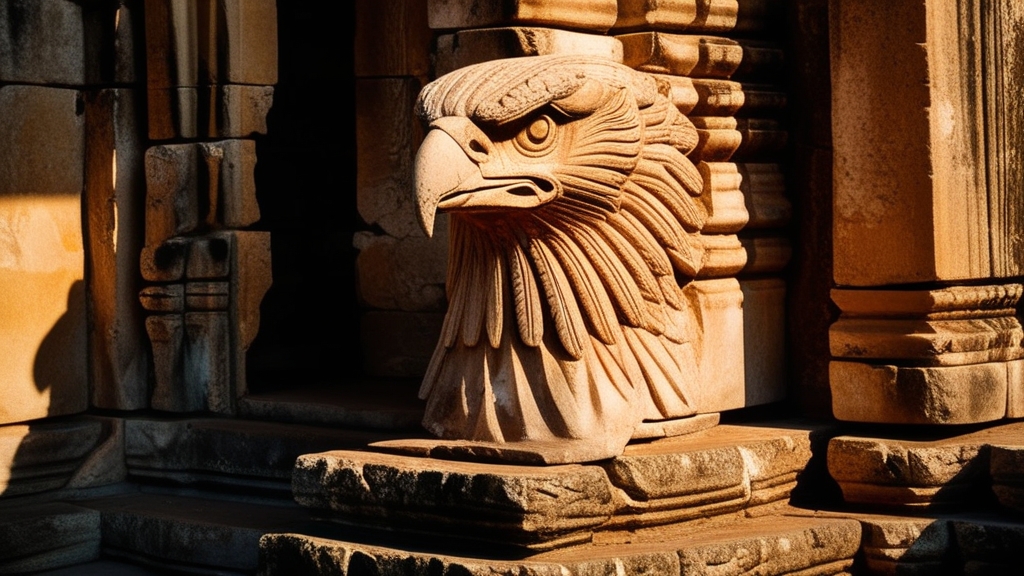
Not every Mexica warrior reached the top tier. The military orders were reserved for men who had proven themselves repeatedly in the hardest possible test — live combat against trained opponents.
How You Qualified for the Military Orders
The two most famous military orders were the cuāuhtli (Eagle Warriors) and the ocēlōmeh (Jaguar Warriors). Both required a minimum of four captives taken in battle to qualify for consideration — and those captives needed to be taken in recognized engagements, not minor skirmishes.
Four captives sounds achievable until you remember that every opponent was also a trained warrior trying to capture you. The attrition rate among warriors trying to reach this threshold was significant. Most never made it. The ones who did were genuinely exceptional fighters.
Advanced Training, Ritual Identity, and Combat Role
Once admitted, Eagle and Jaguar warriors received distinctive equipment: the cuāuhtli wore feathered helmets shaped like eagle heads; the ocēlōmeh wore jaguar pelts over their ichcahuipilli. This wasn't just costume. On a chaotic battlefield, visual identification of elite units matters. Enemies recognized them. Allies rallied to them.
Their training emphasized leadership and tactical coordination rather than individual combat skill — though that was assumed. Elite warriors were expected to anchor the battle line, lead charges, and inspire less experienced fighters around them. They were the equivalent of a modern special operations unit: technically superior, psychologically hardened, and deployed where the fighting was hardest.
For more on Mesoamerican military culture, the Wikipedia entry on Aztec warfare provides a useful structural overview, though it underplays the training curriculum significantly.
What Modern Martial Artists Can Take From Aztec Training Methods
I want to be careful here. Romanticizing ancient systems is easy and usually wrong. But there are genuine principles in Aztec military training that hold up under scrutiny — not because they're exotic, but because they solve real training problems.
Principles That Hold Up: Progressive Overload, Live Drilling, Mentorship
Strip away the ritual context and you find three principles that modern sports science independently validates:
- Progressive overload: The load-carrying and endurance work built a physical base before technical skill was layered on top. That's exactly the sequencing modern strength and conditioning coaches recommend.
- Live pressure testing: The Flower Wars weren't optional enrichment. They were mandatory exposure to resisting opponents. Every serious martial art eventually rediscovered this — you can't simulate real resistance. The Mexica built it into the system structurally.
- Mentorship over lecture: The telpochyahqui model — experienced fighters supervising novices hands-on — is how every elite combat system actually transfers knowledge. The best coaches I've trained under in Thailand and Japan all worked this way. The Mexica just formalized it.
Where Aztec Training Diverges From Modern Combat Sport
The capture-not-kill doctrine is the biggest divergence. Every technique, every weapon choice, every tactical decision in Mexica combat was optimized for taking prisoners alive. That's a completely different objective than modern combat sports, self-defense, or military training, which optimize for stopping threats efficiently.
The psychological architecture is also non-transferable. The cosmic obligation, the sun-feeding belief, the social shame of the uncut hair — these were motivational systems that only worked inside the specific cultural context that produced them. You can't lift them out and drop them into a modern gym. What you can take is the underlying principle: find a motivation system that makes training feel like obligation, not option. The specific content doesn't matter. The structure does.
The Making of a Mexica Warrior
Aztec warrior training was not a program. It was a total system — physical, social, spiritual, and psychological — running from childhood to death, touching every part of a man's life and identity. The telpochcalli built the body and the habits. The telpochyahqui transferred the knowledge. The festivals pressure-tested the skills. The Flower Wars confirmed them in live combat. The rank system rewarded excellence and created a feedback loop that kept improving the force over generations.
Most people who encounter this history get one thing wrong: they think it was about violence. It wasn't. It was about order. Cosmic order, social order, and the very specific order of a captive being led to the temple — which was, in Mexica eyes, the highest possible outcome of a warrior's skill. The violence was the method. The meaning was something else entirely.
If you want to understand how the Mexica built some of the most disciplined fighters in the ancient world, start there. Not with the obsidian blades. With the belief that the sun needed feeding, and that you were the one responsible for doing it.
FAQ
How were Aztec warriors trained from childhood?
Every Mexica boy began military preparation from around age six, with formal schooling starting near fifteen. Commoners attended the telpochcalli school, where veteran warriors supervised physical conditioning, weapons drills, and communal barracks life. Nobles attended the calmecac, which added strategy, law, and ritual alongside the same physical training.
What weapons did Aztec warriors train with?
The three core weapons were the macuahuitl (a wooden club edged with obsidian blades), the tepoztopilli (an obsidian-tipped spear), and the atlatl (a spear-throwing device that extended range and force). Warriors also trained with the chimalli shield and wore the ichcahuipilli quilted cotton armor, drilling in full kit from early in their training.
What were the Flower Wars and how did they train Aztec soldiers?
The xochiyaoyotl (Flower Wars) were formalized conflicts between the Mexica and neighboring city-states like Tlaxcala and Huexotzinco. They served as live combat proving grounds where young warriors could earn their first solo captive — the most important career milestone in Aztec military culture. They were not practice wars; people died, captives were taken, and the fighting was real.
How did an Aztec warrior earn a higher rank?
Rank in the Mexica military was tied directly to the number of captives taken in battle. A solo first capture confirmed basic warrior status. Four or more captives made a warrior eligible for the elite military orders — the Eagle Warriors (cuāuhtli) or Jaguar Warriors (ocēlōmeh). Exceptional records led to command roles and political influence.
What did Aztec warriors eat to maintain their fitness?
The Mexica diet centered on maize in the form of tortillas, tamales, and atole. On campaign, warriors carried pinole — dried, ground, toasted maize mixed with seeds like amaranth or chia — which was calorie-dense and required no cooking. Amaranth (huauhtli) was a key protein source and so central to Mexica culture that the Spanish banned its cultivation after the conquest.
What is the difference between Eagle Warriors and Jaguar Warriors?
Both were elite military orders requiring a minimum of four battlefield captives to join. Eagle Warriors (cuāuhtli) wore feathered helmets shaped like eagle heads; Jaguar Warriors (ocēlōmeh) wore jaguar pelts over their armor. Both orders emphasized leadership and tactical coordination, anchoring the battle line and leading charges where the fighting was hardest.