
Russian Sambo Development: From Soviet Streets to Global Sport

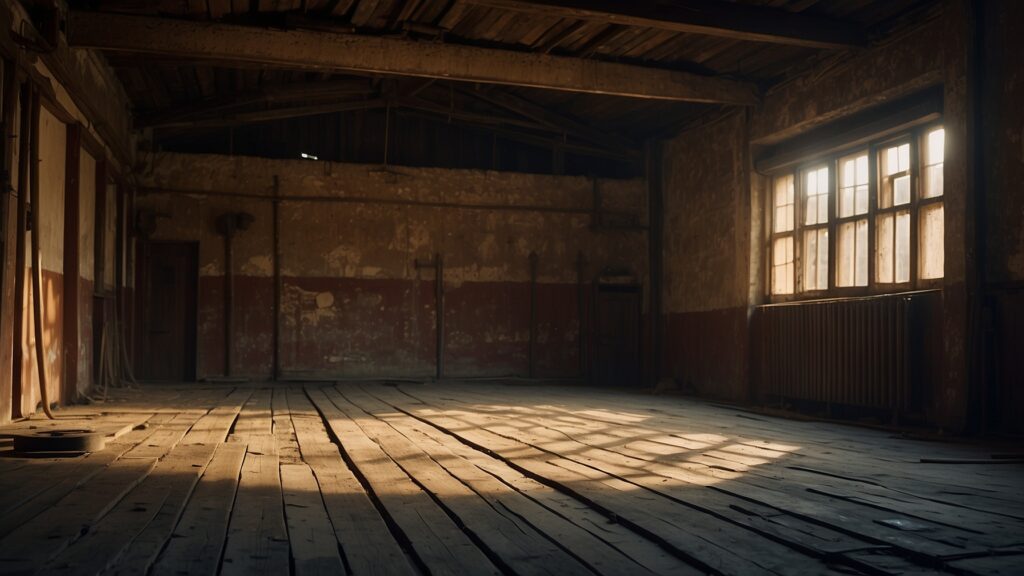
Picture a Red Army training hall in Moscow, 1930. The floor smells of sweat and pine resin. Two soldiers move together — one shoots low for a leg, the other twists into a hip throw that looks almost like judo but lands with a different kind of authority. No gi. No rules about which joints you can attack. Just a system built to end a fight in the shortest possible time.
That scene is where Russian Sambo development really begins. Not in a boardroom or a committee meeting, but on a mat where someone needed a system that actually worked — against bigger opponents, in winter coats, with no referee. The word itself tells you everything: samozashchita bez oruzhiya, self-defense without weapons. Sambo is exactly what it says on the tin.
This guide covers the full arc — from the two men who built it in the 1920s, through Soviet dominance, Cold War rivalry, Combat Sambo's emergence, the slow crawl into American gyms, and where the art stands right now.
- In This Guide
- How Sambo Was Born: The Soviet Origins of a Fighting System
- The Technical Foundation: What Made Sambo Different
- Soviet Dominance and Cold War Competition (1950s–1980s)
- Combat Sambo: The Striking Evolution
- Sambo Arrives in America: Slow Adoption and Resistance
- Sambo in the Modern Era: Renaissance and Global Reach
- Sambo vs. Other Grappling Arts: The Honest Comparison
- Learning Sambo Today: Where to Train and What to Expect
- FAQ
- FAQ
In This Guide
- How Sambo Was Born: The Soviet Origins of a Fighting System
- The Technical Foundation: What Made Sambo Different
- Soviet Dominance and Cold War Competition (1950s–1980s)
- Combat Sambo: The Striking Evolution
- Sambo Arrives in America: Slow Adoption and Resistance
- Sambo in the Modern Era: Renaissance and Global Reach
- Sambo vs. Other Grappling Arts: The Honest Comparison
- Learning Sambo Today: Where to Train and What to Expect
- FAQ
How Sambo Was Born: The Soviet Origins of a Fighting System
Sambo didn't come from one genius in a dojo. It came from two men working in parallel, with different philosophies, in a country that desperately needed a unified fighting doctrine.
The Founders: Oshchepkov and Spiridonov
Vasily Oshchepkov (1893–1938) is the more technically significant of the two. He studied judo directly under Jigoro Kano at the Kodokan in Japan — one of the first Russians ever to do so — and earned his second-degree black belt. He came back to the Soviet Union with a deep structural understanding of how throwing and groundwork fit together as a system, not just a collection of tricks.
Viktor Spiridonov ran a parallel project. His background was in wrestling and self-defense, and his approach was more pragmatic — almost brutal. Where Oshchepkov cared about clean mechanics, Spiridonov cared about what worked on a street against an armed or larger opponent. His version of the system was called Samoz, and it incorporated strikes, joint manipulation, and techniques borrowed from indigenous Soviet wrestling traditions.
The two streams merged, unevenly, through the work of Oshchepkov's student Anatoly Kharlampiev, who spent years traveling across the Soviet Union documenting regional wrestling styles — Georgian chidaoba, Uzbek kurash, Azerbaijani gulesh — and folding the best of each into the emerging system. Kharlampiev is often called the father of Sambo in Soviet propaganda, which is partly politics and partly true.
Blending Wrestling, Judo, and Street Fighting (1920s–1930s)
The technical synthesis is what makes Sambo genuinely interesting. Oshchepkov's judo gave it a throwing vocabulary that Western wrestling lacked. Soviet wrestling traditions gave it a ground game that judo's rules suppressed. And Spiridonov's street-defense instincts gave it a ruthlessness — particularly toward leg attacks — that judo explicitly banned.
By the 1930s, Sambo clubs had spread across the USSR. The sport version offered clean competition. The combat version went into military and security training. Both versions shared the same core: throw fast, attack the legs, finish on the ground.
Why the Soviet Union Needed Sambo
The USSR in the 1920s and 30s was building a new kind of state, and that state needed soldiers, police, and border guards who could handle themselves without firearms. A unified hand-to-hand system — teachable, trainable, standardized — was a military necessity.
But there was a cultural angle too. Stalin's government wanted Soviet achievements, Soviet arts, Soviet superiority. Borrowing judo wholesale from Japan was politically uncomfortable. Sambo gave the state something it could call its own — a synthesis that absorbed foreign techniques but repackaged them as a Soviet creation. That repackaging mattered enormously to how the sport was funded and promoted for the next fifty years.
The Technical Foundation: What Made Sambo Different

Here's where most histories drop the ball. They tell you Sambo blended wrestling and judo. They don't tell you how that blend created something mechanically distinct.
Leg Lock Mastery and Footlock Innovations
Sambo's signature is the leg. Heel hooks, ankle locks, knee bars, toe holds — the full toolkit was present in Sambo decades before the BJJ community rediscovered them in the 2010s. The reason is structural: judo banned leg attacks early in its competition history, and folkstyle wrestling doesn't include submission holds at all. Sambo had no such restrictions.
I've rolled with Sambo practitioners who use leg entries the way a boxer uses the jab — as a threat that sets up everything else. You're not just defending the takedown; you're defending the takedown and the heel hook that comes with it. That dual threat changes the entire rhythm of a match.
The ankle lock in Sambo is applied with a specific hip and body position — the attacking leg scissors across the opponent's hip, the ankle sits in the crook of the elbow, and the finish comes from a full-body extension, not just an arm pull. It's a lever, not a yank. The difference is a clean tap versus a torn ligament.
The Sambo Guard and Positional Strategy
Sambo doesn't have a guard-pull culture. You won't see a Sambo player sit to the mat and invite you into their guard the way a BJJ player might. The philosophy is different: stay on top, attack the legs, finish fast.
The Sambo positional hierarchy looks roughly like this:
- Standing — preferred starting position
- Takedown in progress — attack legs immediately
- Top control — pass and submit
- Leg entanglement — finish from either top or bottom
This makes Sambo matches feel like wrestling matches with submission endings, rather than the slow positional chess of high-level BJJ. Fast. Aggressive. Vertical.
How Sambo Differs from Judo and Wrestling
The clearest way to see the difference is to watch the same throw from three angles:
- Judo: clean seoi nage (shoulder throw), executed in a gi, scored on landing angle and force, match often ends there
- Freestyle wrestling: the throw scores points, you ride on top, you look for a pin
- Sambo: the throw happens in a jacket (kurtka) but the follow-through is a leg lock entry or a ground submission — the throw is a means, not an end
Sambo also allows leg grabs on throws — techniques that judo banned in 2010 for Olympic competition. That single rule difference makes Sambo's takedown vocabulary significantly wider than modern sport judo's.
Soviet Dominance and Cold War Competition (1950s–1980s)

By the 1950s, Sambo had moved from military training halls into full national sport infrastructure. Soviet athletes competed internationally under the Sambo banner, and the state treated victories as propaganda wins.
Sambo as a State Sport and Tool of National Pride
The Soviet sports machine was not subtle. Athletes received state funding, full-time training facilities, and coaching staffs that most Western nations couldn't match. Sambo benefited directly from this system. The sport was taught in physical education programs, military academies, and police training — which meant the talent pool was enormous.
Winning at Sambo wasn't just athletic achievement. It was proof that Soviet physical culture was superior. That framing pushed coaches and athletes to keep refining the system, because stagnation was politically unacceptable.
Olympic Recognition and International Tournaments
Sambo's relationship with the Olympics is a long, complicated disappointment. The sport received provisional recognition from FILA (now United World Wrestling) in 1966 and held its first World Sambo Championships in 1973 in Tehran. Soviet athletes dominated those early tournaments the way you'd expect — they'd been doing this for forty years while everyone else was learning the rules.
Full Olympic inclusion never came. The IOC repeatedly deferred, partly because judo already occupied the "jacket wrestling" slot, and partly because Sambo's geopolitical associations made Western Olympic committees nervous during the Cold War. That exclusion still stings in the Sambo community today.
The Arms Race of Grappling: Sambo vs. Judo vs. Freestyle Wrestling
Soviet coaches faced a strategic choice in the 1960s and 70s: pour resources into Sambo, judo, or freestyle wrestling? All three were viable Olympic or international sports. The answer was all three — and Sambo fed the other two.
Soviet judoka trained Sambo footwork and leg attacks to supplement their judo. Soviet wrestlers used Sambo submissions to threaten opponents who might otherwise stall. The cross-pollination made Soviet grappling athletes genuinely dangerous in every format. Western coaches noticed but couldn't easily replicate the system without the underlying infrastructure.
Combat Sambo: The Striking Evolution
Most guides ignore this entirely. Combat Sambo isn't a footnote — it's a separate discipline with its own champions, its own rules, and a legitimate claim to being one of the most complete combat sports ever designed.
When Sambo Added Punches and Kicks
Combat Sambo (boyevoye sambo) never fully separated from the sport version — the striking elements were always present in the military and law enforcement applications. What changed over time was the formalization of those elements into a competitive ruleset.
A Combat Sambo competitor wears a helmet, groin protector, and the standard Sambo kurtka jacket. The match allows:
- Punches and open-hand strikes to the head and body
- Kicks including low kicks, body kicks, and head kicks
- All Sambo throws and takedowns
- Ground submissions including chokes (which Sport Sambo restricts)
- Ground-and-pound in limited form
The result looks like MMA with a jacket. Fast, violent, technically demanding.
Combat Sambo Rules and Scoring
Scoring in Combat Sambo rewards clean technique over grinding pressure:
- Knockdown: significant points, can end the match
- Throw for amplitude: points scaled by how cleanly the opponent lands
- Submission: immediate victory
- Ground control: time-based points for dominant position
The match ends on submission, knockout, or points at the bell. There's no stalling allowed — referees restart action aggressively. Matches tend to be short and decisive.
Combat Sambo vs. MMA: Why the Crossover Never Happened (Yet)
You'd think Combat Sambo would have flooded into MMA. It hasn't — not fully. The reasons are structural:
- No unified promotion: Combat Sambo lacks a UFC-style organization to market its champions globally
- The jacket problem: competitors train extensively in the kurtka, which doesn't transfer to MMA's no-gi environment without retraining
- Institutional loyalty: serious Combat Sambo athletes compete within the Sambo federation system, not in MMA promotions
That said, individual practitioners have crossed over successfully. Fedor Emelianenko — widely considered the greatest heavyweight MMA fighter in history — is a Combat Sambo world champion. His ground-and-pound from top position, his leg attacks, his fearless guard entries: all of it traces directly to Combat Sambo training. He's the proof of concept. The system just hasn't produced a wave of successors in MMA, yet.
Sambo Arrives in America: Slow Adoption and Resistance
Sambo's journey into American gyms is a story about institutional inertia as much as anything else.
Early American Practitioners and the Wrestling Establishment
American wrestling in the 1970s was a closed ecosystem. Folkstyle wrestling dominated colleges and high schools, with a clear pipeline to Olympic freestyle. Coaches who'd built careers in that system had no incentive to introduce a Soviet martial art — especially during the height of Cold War tension.
The few Americans who encountered Sambo early were usually judoka or freestyle wrestlers who'd competed internationally and seen Soviet athletes use techniques that didn't fit neatly into either discipline. They came back curious. Getting anyone else curious was the hard part.
Why American Grappling Chose Folkstyle Wrestling Over Sambo
Folkstyle wrestling has a massive institutional advantage: it's embedded in American high schools and colleges. Every year, hundreds of thousands of kids learn to wrestle. That pipeline produces athletes, coaches, and fans. Sambo had none of that.
Judo, at least, had the Olympics and a network of clubs. Sambo had neither. The Cold War bias was real — even practitioners who respected the system were reluctant to publicly champion a Soviet martial art in the 1970s and 80s.
Building USA SAMBO from Scratch (1980s–1990s)
USA SAMBO was formally established to bring the sport into American competition. The process was slow — building a federation from scratch means finding coaches, certifying instructors, establishing tournament infrastructure, and convincing athletes that the investment is worth it.
Progress came through individual evangelists: judoka who'd competed against Soviet athletes, wrestlers who'd seen the leg lock game up close, and a handful of dedicated coaches who built small but serious programs in cities like New York, Los Angeles, and Chicago. By the 1990s, the foundation existed. It was thin, but it was there.
Sambo in the Modern Era: Renaissance and Global Reach
Something shifted in the 2010s. Sambo stopped being a curiosity and started being something people actively sought out.
Sambo's Resurgence in BJJ and Grappling Circles
The leg lock revolution in BJJ is the single biggest driver of Western interest in Sambo. When John Danaher's squad — Gordon Ryan, Garry Tonon, Eddie Cummings — started systematically attacking heel hooks in competition around 2015, the grappling world scrambled to understand the leg lock game. Old-school Sambo coaches had been teaching this material for decades.
I remember watching Gordon Ryan's early heel hook finishes and thinking: this is Sambo. The hip alignment, the inside position, the entry off a failed takedown — it's textbook. The BJJ community reinvented the wheel, then discovered Sambo had the original blueprint.
This created genuine demand. BJJ practitioners started seeking out Sambo camps, Sambo seminars, and Sambo training partners. The art went from obscure to relevant almost overnight in submission grappling circles.
International Federation Growth and World Championships
The International Sambo Federation (FIAS) has grown its World Championships into a genuinely prestigious event. Nations across Europe, Asia, Central Asia, and increasingly South America and Africa now field competitive teams. Russia remains dominant but no longer unchallenged — athletes from Georgia, Kazakhstan, Mongolia, and Japan regularly medal.
Key international tournaments include:
- FIAS World Sambo Championships (annual)
- European Sambo Championships
- Pan-American Sambo Championships
- World Combat Sambo Championships (separate bracket)
The sport received SportAccord recognition and continues to push for Olympic inclusion, with each cycle bringing renewed lobbying and renewed disappointment.
Sambo Influencers: Who Brought It Back to the West
Beyond Fedor, several practitioners have been instrumental in Western Sambo's growth:
- Reilly Bodycomb: American no-gi grappler who trained extensively in Sambo and produced instructional content that introduced leg lock entries to a generation of BJJ players
- Stephen Koepfer: longtime USA SAMBO coach who built competitive programs and coached international competitors
- Khabib Nurmagomedov: though his base is Dagestani wrestling, his grappling style draws heavily on Sambo principles — his dominance in UFC made Western fans curious about the source material
Sambo vs. Other Grappling Arts: The Honest Comparison
The "which art is better" question is almost always the wrong question. The right question is: better for what?
Sambo vs. BJJ: Leg Locks, Speed, and Philosophy
Here's the honest breakdown:
| Category | Sambo | BJJ |
|---|
| Leg lock depth | Extensive — core curriculum | Historically limited, now growing |
|---|---|---|
| Throwing | Strong — jacket and no-gi | Limited in most schools |
| Chokes | Combat Sambo only | Full curriculum |
| Match pace | Fast, vertical | Can be slow, positional |
| Training culture | Competition-focused | Mixed — sport and self-defense |
| Gi/no-gi | Sambo jacket (kurtka) | Both, depending on school |
Sambo wins on leg locks and throwing. BJJ wins on guard work and choke depth. Neither is "better" — they're different tools shaped by different competitive environments.
Sambo vs. Judo: Why Both Exist
Sambo grew from judo, which makes comparing them interesting. Modern sport judo has become increasingly restrictive — no leg grabs, limited ground time, fast stand-ups. Sambo kept the throwing vocabulary but added submissions and removed the time pressure on the ground.
For pure throwing technique, elite judoka are hard to beat. For the full grappling package — throws plus leg locks plus ground control — Sambo is more complete. The two arts respect each other because their practitioners understand the overlap.
Sambo vs. Krav Maga and Systema: Different Tools for Different Goals
This comparison comes up a lot and it's mostly apples to oranges. Krav Maga is a self-defense system designed for civilians and military — it prioritizes aggression, simplicity, and weapon defense over competition performance. Systema is a Russian military art focused on body mechanics, breathing, and unconventional movement.
Sambo, even in its combat form, is a sport with rules and tested techniques. Krav Maga and Systema are training methodologies without competitive pressure-testing. That doesn't make them inferior — it makes them different. If you want to compete, Sambo. If you want a quick civilian self-defense curriculum, Krav Maga serves a different need.
Learning Sambo Today: Where to Train and What to Expect

Finding a Sambo gym is harder than finding a BJJ gym. That's just the reality. But it's getting easier.
Finding Sambo Gyms and Qualified Instructors
Start with USA SAMBO (usasambo.com) — they maintain a club directory that lists affiliated gyms by state. Outside the US, your national federation (check FIAS's website) will have similar resources.
What to look for in a qualified instructor:
- Competition background in Sambo specifically (not just judo or wrestling)
- Affiliation with a recognized national federation
- Experience coaching to FIAS or national championship level
- Transparent curriculum — they should be able to explain why they teach techniques in a specific order
If you can't find a dedicated Sambo gym, a strong judo club with open-minded coaches is a reasonable starting point. Add no-gi leg lock training from a Sambo-influenced source (Reilly Bodycomb's instructionals are genuinely good), and you're building the foundation.
Sambo Training Structure: Drills, Sparring, and Conditioning
A typical Sambo class looks like this:
- Warm-up: breakfalls (ukemi), rolling, shrimping — the same movement vocabulary as judo and BJJ
- Technique drilling: throws, entries, leg lock setups — usually in pairs, repetition-focused
- Situational sparring: start from a specific position (standing clinch, leg entanglement, top control) and work from there
- Full sparring (randori): live matches with full rules
- Conditioning: often integrated — Sambo players are expected to be athletic, not just technical
The intensity is high. Sambo training culture doesn't coddle beginners the way some BJJ gyms do. You're expected to take falls from day one, and the leg lock sparring can be rough if partners aren't careful. Find a gym that takes safety seriously — tapping early is not weakness, it's longevity.
Sambo for MMA, Self-Defense, and Sport
Sambo transfers well to MMA — probably better than pure BJJ or pure wrestling, because it combines throwing with submission finishing. The gaps are:
- Striking: Sambo's striking curriculum is limited outside Combat Sambo
- No-gi adaptation: the kurtka jacket grips don't transfer directly — you need to retrain entries
- Choke defense: Sport Sambo doesn't train chokes, which is a real hole against BJJ players
For self-defense, Sambo's emphasis on fast throws and leg attacks is practical. Putting someone on the ground quickly and controlling the finish is exactly what real-world defense looks like. For sport competition, the FIAS circuit offers legitimate international competition at multiple levels.
Russian Sambo development didn't stop in 1938. It's still happening — in FIAS tournament brackets, in MMA gyms where coaches are finally cross-training the leg lock game, and in the growing number of Sambo clubs opening outside the former Soviet bloc. The system is alive because it works.
FAQ
When was Sambo developed and by whom?
Sambo was developed in the 1920s primarily by Vasily Oshchepkov, who studied judo under Jigoro Kano at the Kodokan in Japan, and Viktor Spiridonov, who came from a wrestling and self-defense background. Their parallel systems were later synthesized and formalized by Anatoly Kharlampiev. By the 1930s, Sambo clubs had spread across the Soviet Union.
What is Combat Sambo and how does it differ from Sport Sambo?
Combat Sambo (boyevoye sambo) adds punches, kicks, and chokes to the standard Sambo ruleset. Sport Sambo restricts striking and limits chokes, focusing on throws and joint locks. Combat Sambo competitors wear helmets and groin protection in addition to the standard kurtka jacket. Fedor Emelianenko is the most famous Combat Sambo world champion.
Is Sambo better than BJJ?
Neither is universally better — they're optimized for different things. Sambo excels at throwing, leg locks, and fast-paced vertical grappling. BJJ has deeper guard work, a richer choke curriculum, and more developed positional theory. The best grapplers today cross-train both, which tells you something about the value of each.
Where can I learn Sambo today?
Start with the USA SAMBO club directory at usasambo.com if you're in the United States. Internationally, the FIAS website lists affiliated national federations. If no dedicated Sambo gym is nearby, a strong judo club combined with no-gi leg lock training from Sambo-influenced instructors is a solid alternative starting point.
FAQ
When was Sambo developed and by whom?
Sambo was developed in the 1920s primarily by Vasily Oshchepkov, who earned a black belt under Jigoro Kano at the Kodokan, and Viktor Spiridonov, who came from a wrestling and self-defense background. Their parallel systems were later synthesized by Anatoly Kharlampiev. By the 1930s, Sambo clubs had spread across the Soviet Union.
What is Combat Sambo and how does it differ from Sport Sambo?
Combat Sambo adds punches, kicks, and chokes to the standard Sambo ruleset. Sport Sambo restricts striking and limits chokes, focusing on throws and joint locks. Combat Sambo competitors wear helmets and groin protection alongside the standard kurtka jacket. Fedor Emelianenko is the most famous Combat Sambo world champion.
Is Sambo better than BJJ?
Neither is universally better — they're optimized for different things. Sambo excels at throwing, leg locks, and fast-paced vertical grappling. BJJ has deeper guard work, a richer choke curriculum, and more developed positional theory. The best grapplers today cross-train both, which tells you something about the value of each system.
Where can I learn Sambo today?
Start with the USA SAMBO club directory at usasambo.com if you're in the United States. Internationally, the FIAS website lists affiliated national federations. If no dedicated Sambo gym is nearby, a strong judo club combined with no-gi leg lock training from Sambo-influenced instructors is a solid alternative starting point.